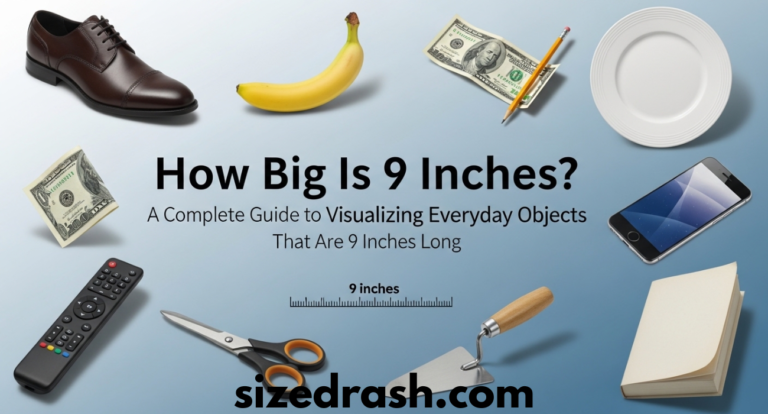
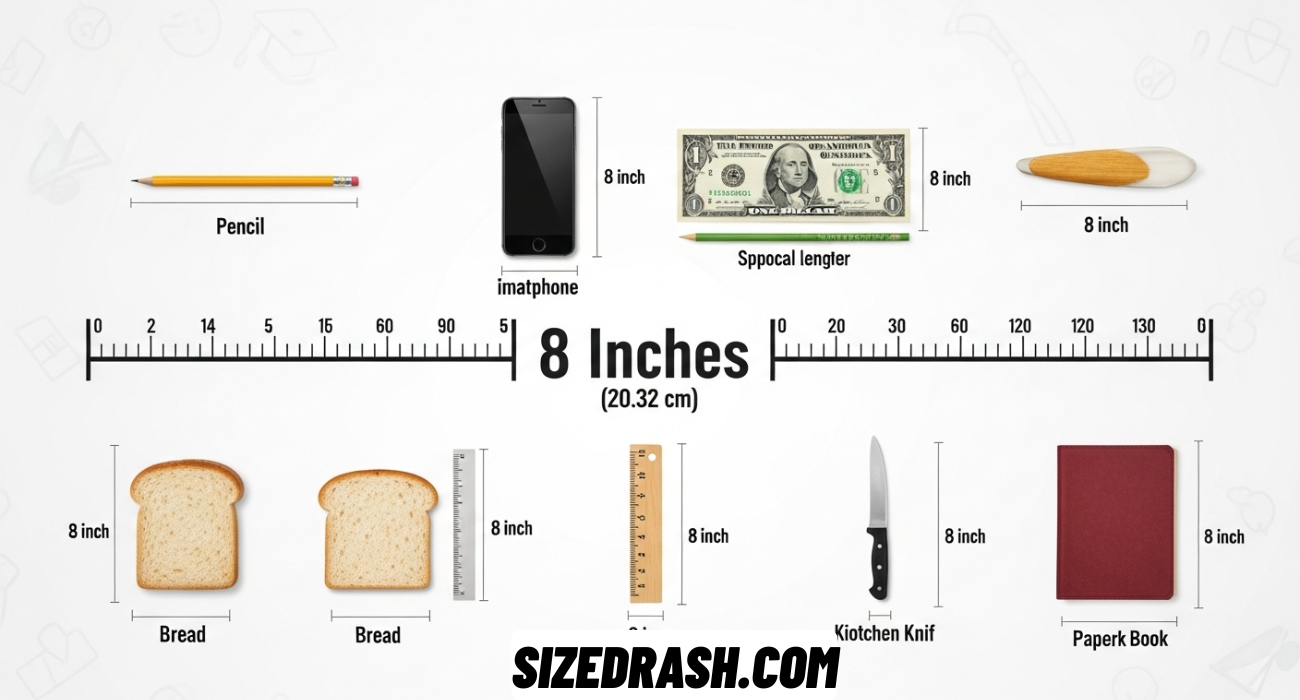
8 Inches Explained: How Long It Is and Items That Are 8 Inches Long in Everyday Life
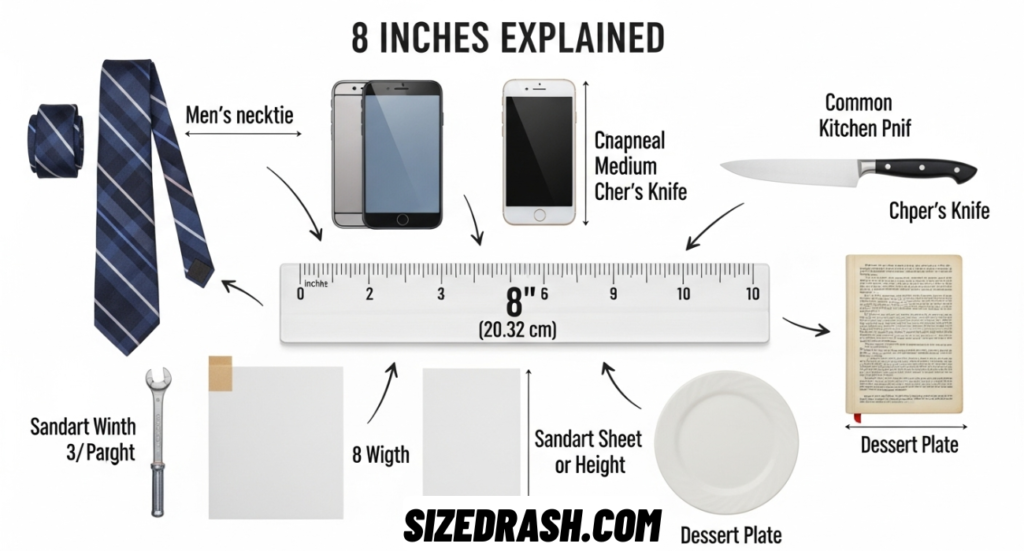
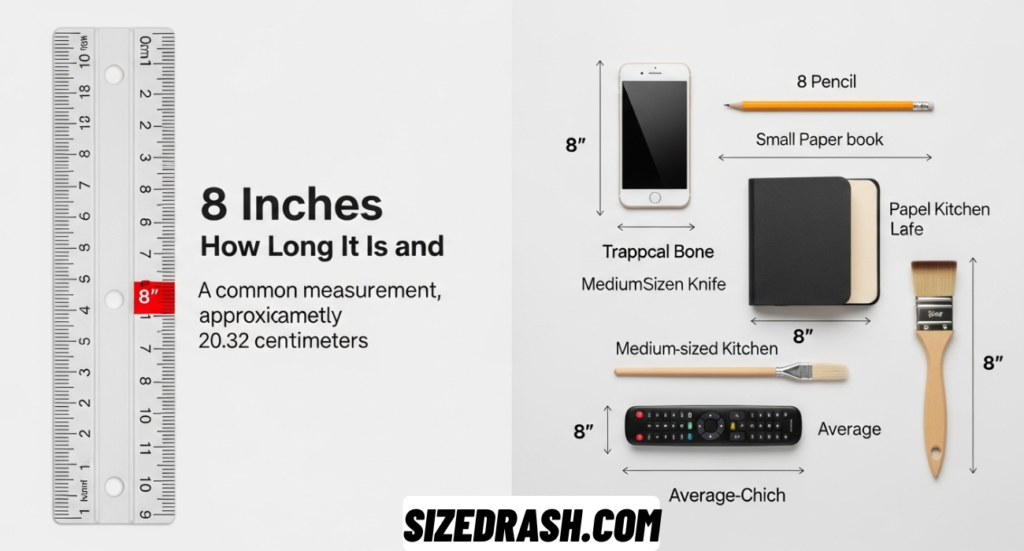
Eight inches is a unit of length. It is the same as 20.32 centimeters. People use it to measure things in homes, schools, and offices.
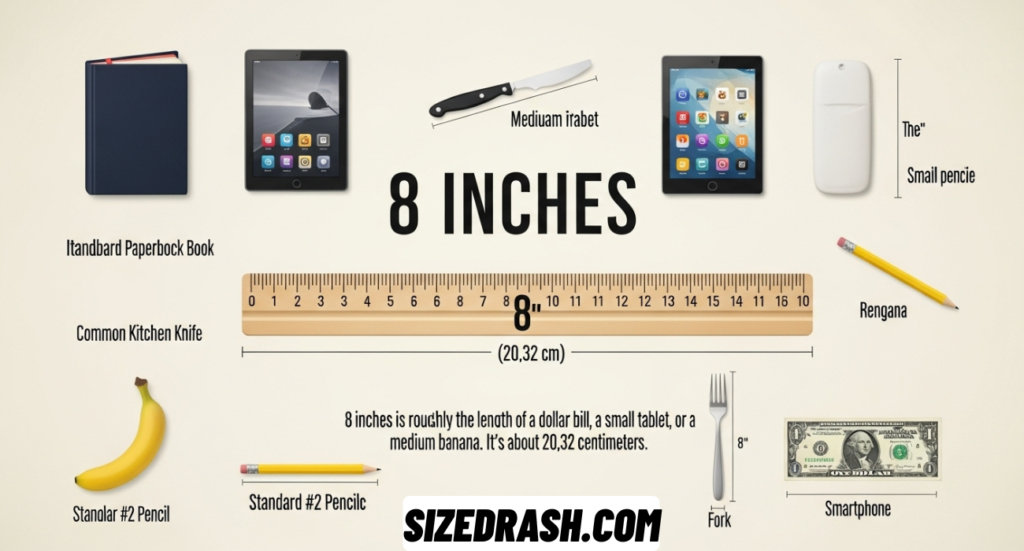
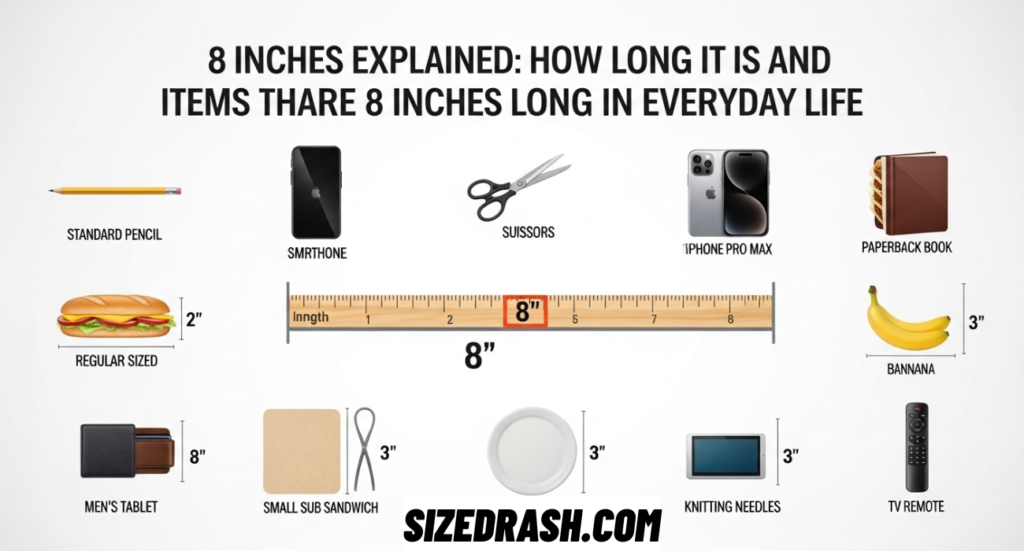
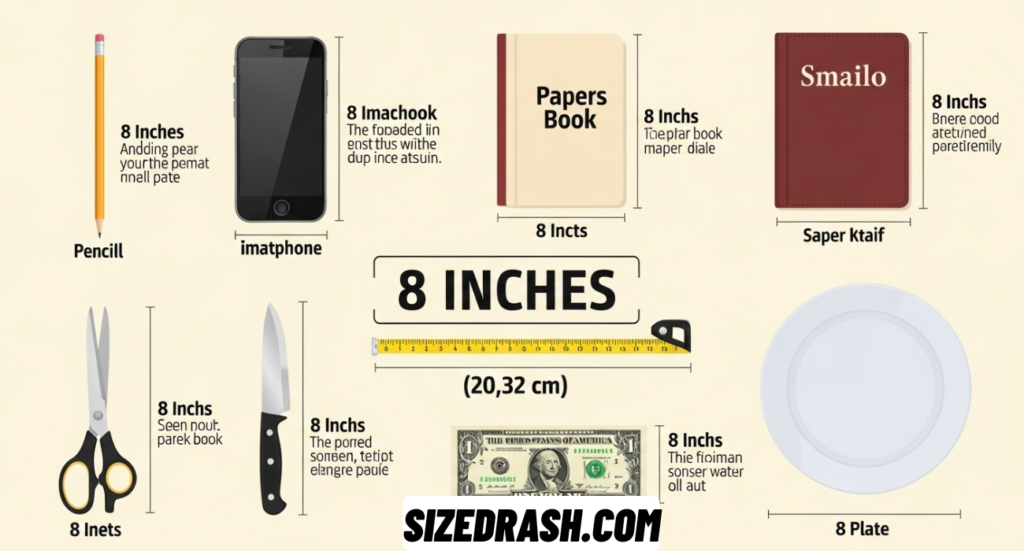
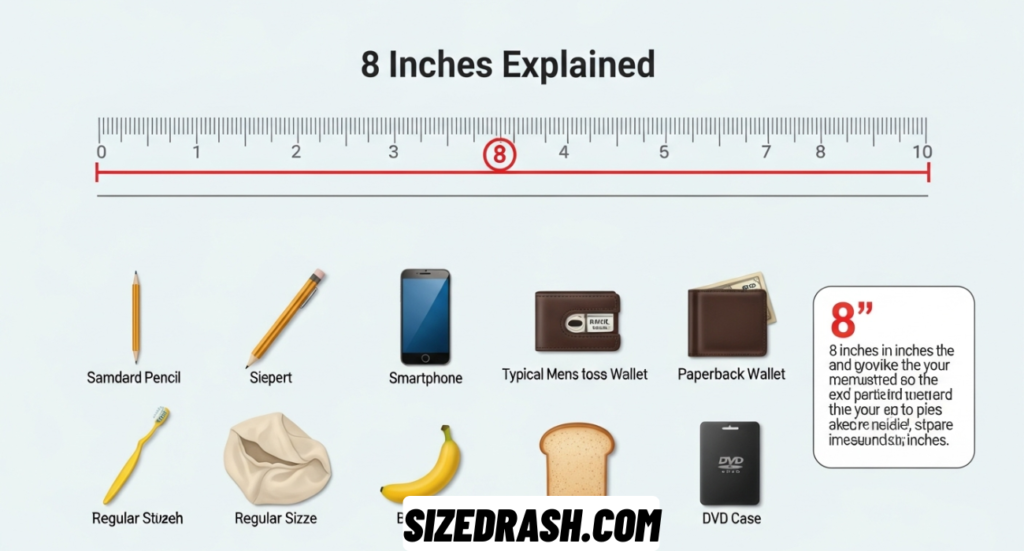
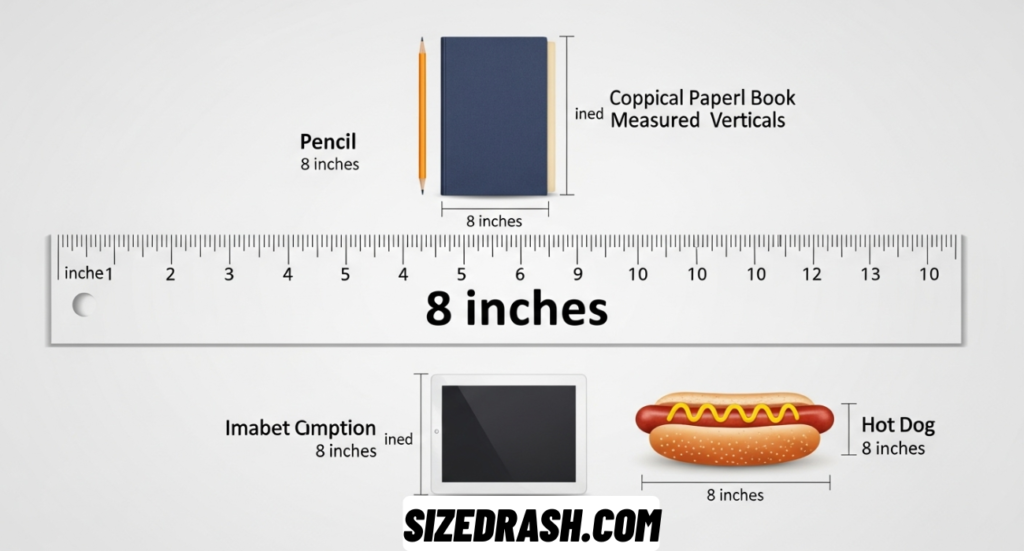
Do you know what 8 inches looks like? Many everyday items are about this long. You can use them to guess length without a ruler.
Items like pencils, bananas, and coins are close to 8 inches. It helps in arranging things or doing small projects. Learning 8 inches makes measuring easy and fun.
How Long is 8 Inches?
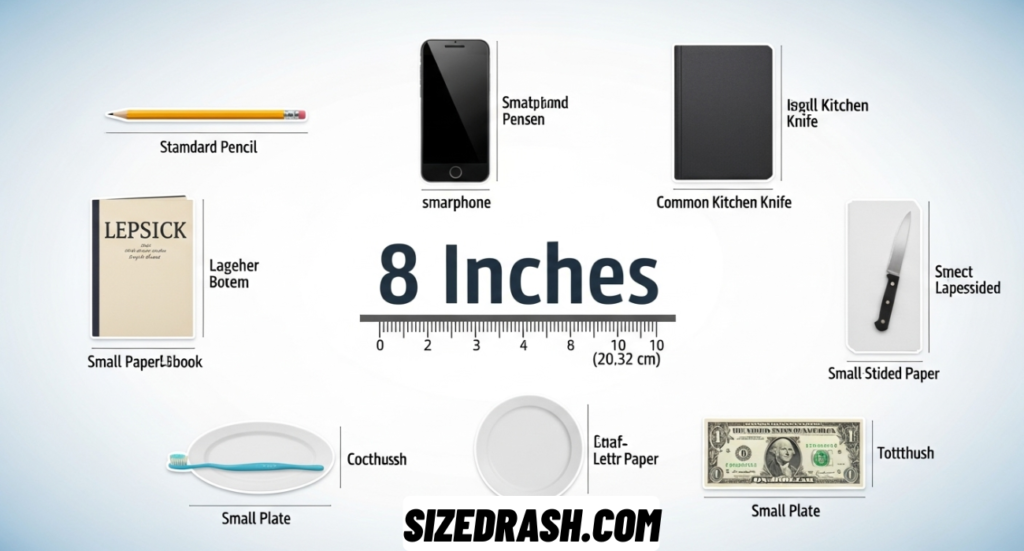
8 inches represents a common dimension used across American households. In metric terms, it equals centimeters millimeters, specifically inches to centimeters at 20.32 and inches to millimeters at 203.2. These conversions help when reading product labels or following instructions that mix systems.
In daily life, visual measurement length comparison matters more than numbers. Think about the height of a coffee mug smartphone or the width of a small shelf. Recognizing this household measurement reference makes approximate measurement tools feel reliable and natural.
Read Also;7 Inches Long: A Clear, Real-World Guide to Size, Measurement, and Everyday Objects
Items That Are 8 Inches Long
When people search for items that are 8 inches long, they want quick, relatable examples. These reference objects same length help with quick size reference tasks like measuring space DIY projects or rearranging furniture without grabbing a ruler handy.
Each item below offers a practical estimation technique using everyday objects estimation technique. While small variations exist, these examples remain trusted everyday size examples across homes, schools, and workplaces in the United States.
1. Average Male Hand
An average male hand often measures close to eight inches from wrist crease to fingertip. This makes hand measurement one of the oldest approximate measurement tools known. People naturally use it for quick measurement household items when precision is not critical.
In everyday situations, hands act as built-in rulers. While hand sizes differ, this common measuring alternatives method works well for length comparison tasks like spacing objects or estimating product size while shopping.
2. 8 Us Quarters
Using US quarters is a classic coin measurement trick. Each quarter measures just under one inch, and lining up eight creates a close visual measurement for 8 inches. This method often appears in everyday measurement guide examples.
Coins remain one of the most accessible household items measuring tool unavailable solutions. Whether checking drawer depth or shelf spacing, quarters provide a fast quick size reference without special tools.
3. IPad Mini
The iPad mini serves as a popular tablet size comparison object. Its length sits slightly above eight inches, making it useful for approximate measurement tools when estimating space for electronics or accessories.
In shopping crafting organizing space, people often rely on devices they carry daily. This makes the iPad mini a convenient everyday objects reference for size estimation without ruler moments.
4. Small Hockey Stick Blade
A hockey stick blade size on youth or practice sticks often measures about eight inches. This piece of sports equipment provides a firm and straight reference, useful beyond the rink.
In homes with sports gear, these blades double as measuring tool quick measurement aids. They help visualize length comparison when planning storage or arranging equipment.
5. 2 Toilet Paper Roll
A single toilet paper roll width averages around four inches. Place two together, and you get a close match to 8 inches. This trick works well because rolls appear in nearly every home.
As household items, toilet paper rolls highlight how everyday objects estimation technique simplifies tasks like box sizing or shelf spacing without a ruler.
6. A Medium-Sized Banana
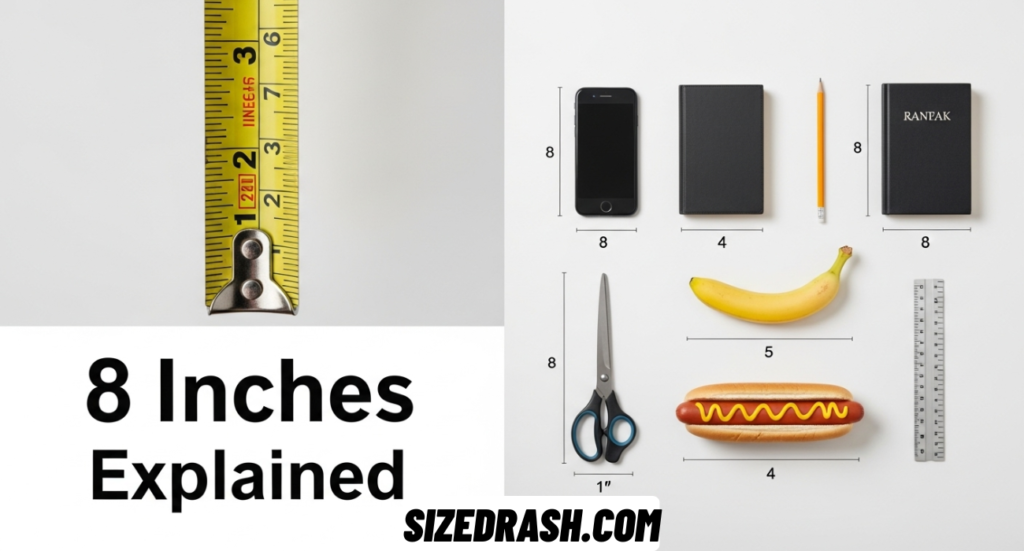
A medium-sized banana usually falls within seven to eight inches. This makes banana length a surprisingly effective visual measurement reference used widely online and offline.
Food items often help with quick measurement household items needs. In kitchens or grocery stores, bananas offer an intuitive everyday size examples comparison.
7. Height Of A Standard Pencil
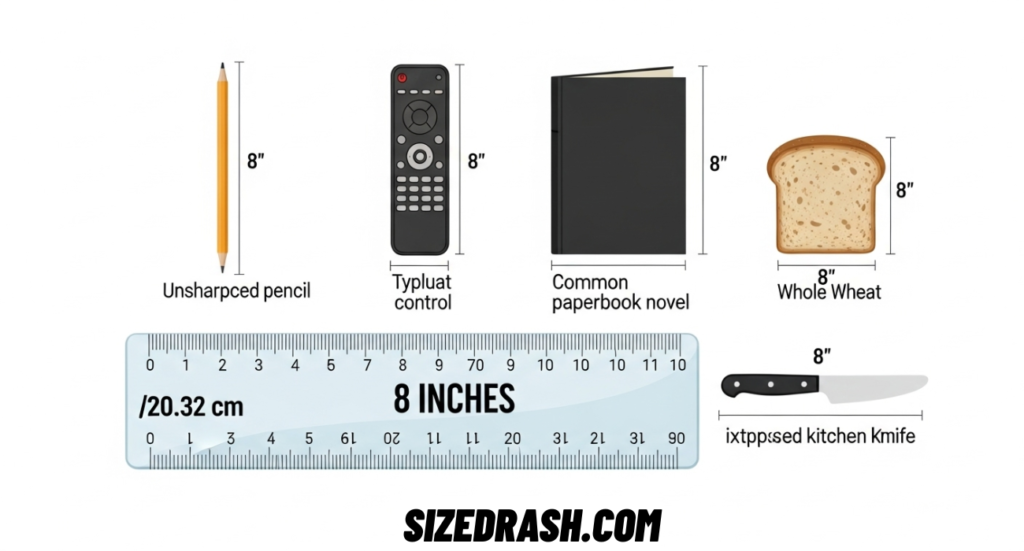
A standard pencil typically measures around eight inches before sharpening. This makes pencil length one of the most reliable household measurement reference tools.
Schools and offices benefit from this common measuring alternatives approach. A pencil works well for DIY measuring ideas and layout planning without extra tools.
8. 3 Soda Cans
The soda can diameter averages about 2.6 inches. Placing three side by side creates an approximate eight-inch span, useful for visual measurement length comparison.
Because soda cans appear everywhere, they provide fast everyday measurement guide support when estimating widths or gaps.
9. 2 Popsicle Sticks
Each popsicle stick measures about four inches. Combining popsicle sticks gives a clean eight-inch reference, popular in crafts and school projects.
These sticks work well for DIY measuring ideas and promote reuse. They show how simple materials become effective approximate measurement tools.
10. A Mouse Pad
Many small mouse pad dimensions fall close to eight inches in length. This makes them useful for measuring space on desks or shelves.
As part of modern setups, mouse pads act as reliable everyday objects for size estimation without ruler tasks in offices and homes.
11. A Kitchen’s Knife
An 8-inch chef’s knife remains a standard kitchen knife size. The knife blade length offers a firm, straight reference for both cooking and measuring.
This kitchen tool doubles as one of the most dependable kitchen measurement hacks, especially when a ruler is out of reach.
Quick Reference Table for 8 Inches
| Everyday Object | Approximate Measurement Use |
| Average male hand | hand measurement |
| US quarters | coin measurement |
| iPad mini | tablet size comparison |
| Hockey stick blade | sports equipment |
| Toilet paper rolls | toilet paper roll width |
| Medium banana | banana length |
| Standard pencil | pencil length |
| Soda cans | soda can diameter |
| Popsicle sticks | DIY measuring ideas |
| Mouse pad | mouse pad dimensions |
| Kitchen knife | knife blade length |
12. Hardcover Book
A standard hardcover book with a colorful cover.
Many hardcover books measure close to 8 inches in height, making them an easy reference for estimation. While book dimensions vary by genre and publisher, novels, textbooks, and coffee table books often hover around this length. When a ruler isn’t available, grabbing a book from your shelf can quickly give you a sense of what 8 inches looks like.
Using a book as a measuring tool is surprisingly practical. For example, when arranging books on a shelf, spacing objects on a desk, or even measuring a small wall section for artwork, the height of a typical hardcover book provides a convenient and accessible reference. Its flat, rigid shape also makes it easier to line up with other items.
13. Standard Envelope
A white business envelope on a wooden table.
A standard #10 envelope, commonly used for letters, measures about 8.5 inches long, slightly over the 8-inch mark but close enough for rough measurements. These envelopes are often found in offices and homes, making them an easy tool for estimating lengths when a tape measure is missing.
I often find myself using envelopes for small home projects, like marking spacing for wall art or folding papers to fit a storage box. Their uniform shape and consistent size across brands make them surprisingly reliable for quick measurements.
14. Cutting Board
A medium-sized kitchen cutting board with vegetables on top.
Many rectangular cutting boards measure around 8 inches in width, making them a handy reference in the kitchen. When preparing meals or organizing kitchen tools, this practical object can double as a rough measuring guide.
The rigid and flat nature of cutting boards makes them especially useful for visualizing space on countertops or cabinets. I often use my cutting board to gauge whether a new appliance will fit on a shelf, turning a common kitchen item into a small, convenient measuring tool.
15. Sticky Note Pad
A stack of colorful sticky notes.
While many sticky notes are square and typically 3 inches per side, when stacked or combined, their length can approach 8 inches. Office workers and students often overlook these everyday stationery items, but they can be surprisingly versatile for rough measurement purposes.
I sometimes use sticky notes to mark spacing for bulletin boards or small DIY projects. They offer a flexible, lightweight tool for visualizing length in a pinch, proving that even small office supplies can serve multiple purposes beyond writing reminders.
16. Small Picture Frame
A small framed photo on a desk.
Many standard small photo frames, such as 5×7 frames, have a diagonal measurement or outer dimension close to 8 inches. These frames are common in homes and offices, providing an easy-to-access reference for estimating length.
Beyond decoration, I’ve found that small frames can help when organizing wall layouts or spacing items on a shelf. Their straight edges and consistent dimensions make them surprisingly useful for quick, practical measurement estimates.
17. Ruler (12-inch) – Half Measurement
A wooden ruler with standard markings.
While a 12-inch ruler is longer than 8 inches, the 2/3 length from the start to the 8-inch mark can serve as a ready reference. This allows you to gauge smaller objects even if a dedicated 8-inch ruler isn’t handy.
This approach is particularly handy for school projects or crafts. Instead of searching for the exact length, I often just measure from the start to the 8-inch mark and compare it to my objects, saving time while maintaining reasonable accuracy.
18. Small Laptop Screen
A laptop displaying a spreadsheet.
Some compact laptops and netbooks feature screens around 8 inches diagonally. While most laptops today are larger, older or specialty small models fall within this size, offering a portable, quick reference for visualization.
I often use my small laptop as a “rough ruler” when setting up a desk layout or determining if a bag can accommodate a device. Its slim, rectangular shape makes it practical for comparing against other items, showing that tech can double as a measuring tool.
19. Large Cookie or Biscuit
A round cookie on a plate.
Some bakery cookies or homemade biscuits measure close to 8 inches in diameter. While it may sound unusual, food items like this can surprisingly provide a quick reference when other tools aren’t at hand.
I sometimes use large cookies as a fun, edible way to visualize spacing or portion sizes for a party setup. They illustrate how even everyday consumables can serve a practical role in measuring and comparing sizes creatively.
20. Small Tablet Stylus
A stylus pen resting next to a tablet.
Many stylus pens designed for tablets or digital drawing measure about 8 inches in length. While they are often thought of only as accessories, their consistent size makes them a surprisingly convenient reference for rough measurements when a ruler isn’t available.
I frequently use my stylus as a quick measuring tool when arranging items on a desk or checking the size of small gadgets. Its slim, straight shape and uniform length make it easy to compare against other objects, showing that even tech accessories can serve a practical dual purpose.
21. Serving Tray
A rectangular serving tray on a kitchen counter.
Some small serving trays, especially those meant for drinks or snacks, measure around 8 inches in width or height. These trays, commonly found in kitchens or dining areas, can double as a handy estimation tool when you need a quick visual reference for small items.
I often use trays to gauge whether plates, bowls, or other kitchen tools will fit in cupboards or on shelves. Their flat, rigid surface and predictable size make them surprisingly reliable for informal measuring tasks, turning an everyday kitchen item into a practical tool.
22. Plant Pot
A small indoor plant pot sitting on a table.
Many small decorative plant pots measure close to 8 inches tall or wide, making them easy to use as an estimation guide. These pots are common in homes and offices and can provide a visual benchmark when arranging plants, shelves, or furniture.
Beyond decoration, I often compare a plant pot’s size to objects I’m organizing, like books or boxes. Its solid, uniform shape allows me to quickly gauge approximate lengths without pulling out a ruler, proving that everyday décor can be surprisingly functional.
FAQs
What is 8 inches in centimeters?
8 inches is equal to 20.32 centimeters, which can help when converting measurements for international use.
How long is 8 inches compared to a smartphone?
Most standard smartphones are slightly smaller than 8 inches wide or long, making an 8-inch reference useful for quick visual comparisons.
Can everyday items really be used to measure 8 inches?
Yes! Items like bananas, pencils, or US quarters can provide approximate 8-inch measurements when a ruler isn’t available.
Is 8 inches considered a common measurement?
Absolutely—8 inches appears frequently in household, office, and kitchen items, making it a practical reference for everyday tasks.
Conclusion
Everyday items can help us understand 8 inches in a simple way. Things like pencils, bananas, coins, and even books can show us what this length looks like. Using these objects makes measuring easy when we do not have a ruler. Knowing the size of 8 inches helps us in many small tasks, like arranging books, organizing a desk, or setting up items on a shelf. It also helps in school projects and small DIY activities at home.
Learning to estimate 8 inches with common objects makes measuring fun and practical. This skill helps us save time and use what is around us. By practicing with everyday items, we can quickly see how long 8 inches is in real life. It is a simple and useful skill for daily life.