How Long Is 6 Inches Compared to an Object? Easy Size Comparisons Using Everyday Objects
6 inches compared to an object means looking at something and seeing how long it is in inches. One inch is a small unit of length in the imperial system. So, six inches equals 15.24 centimeters or 152.4 millimeters.
It can be hard to imagine 6 inches just by numbers. Everyday things make it easier to see. Using common objects helps you guess the size fast.
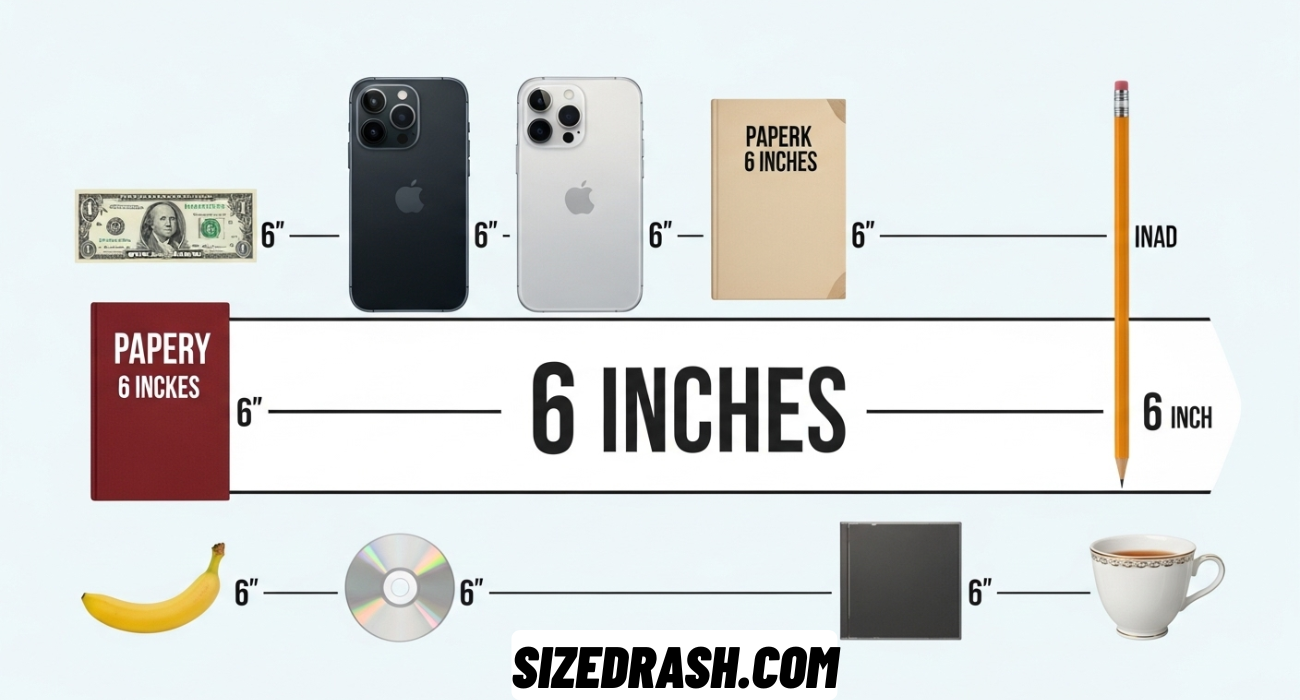
Many objects are close to six inches. A US dollar bill, a small book, or a toothbrush can show the length. These items act as a quick measuring tool for daily life.
How long is 6 inches?
6 inches is a standard unit of measurement in the imperial system, commonly used across the United States. In the metric system, it equals 15.24 centimeters or 152.4 millimeters. While those numbers sound precise, they don’t always help with visualizing size in real situations.
That’s why people rely on a reference point instead of numbers. Seeing 6 inches compared to something familiar turns abstract math into a real-world image. This approach helps with measuring without ruler moments and makes size estimation easier, faster, and more natural.
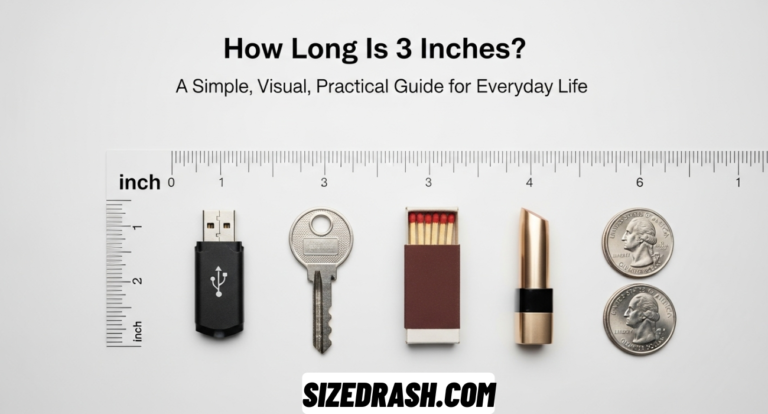
Read Also : How Long Is 3 Inches? A Simple, Visual, and Practical Guide for Everyday Life
How Big is 6 Inches Compared To a Standard Ruler?
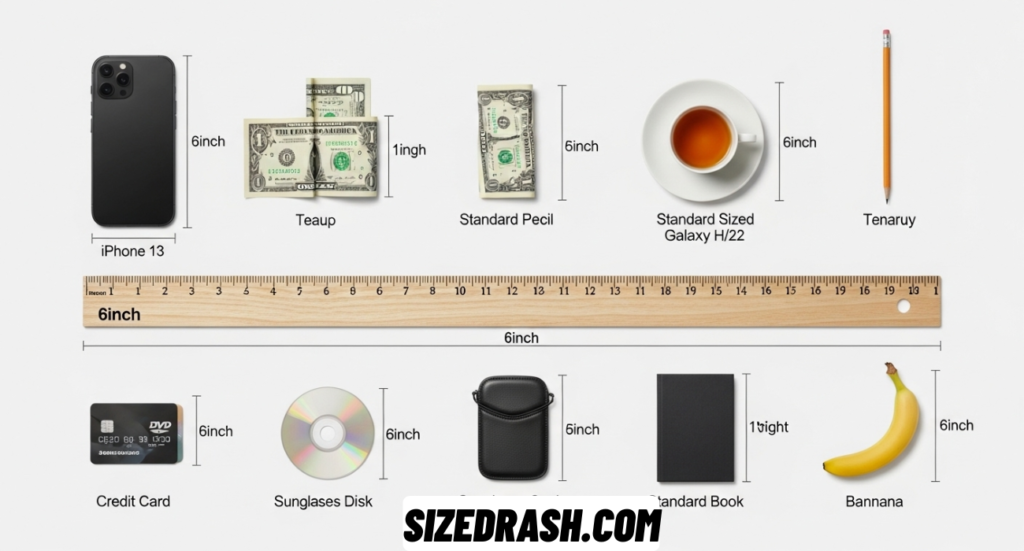
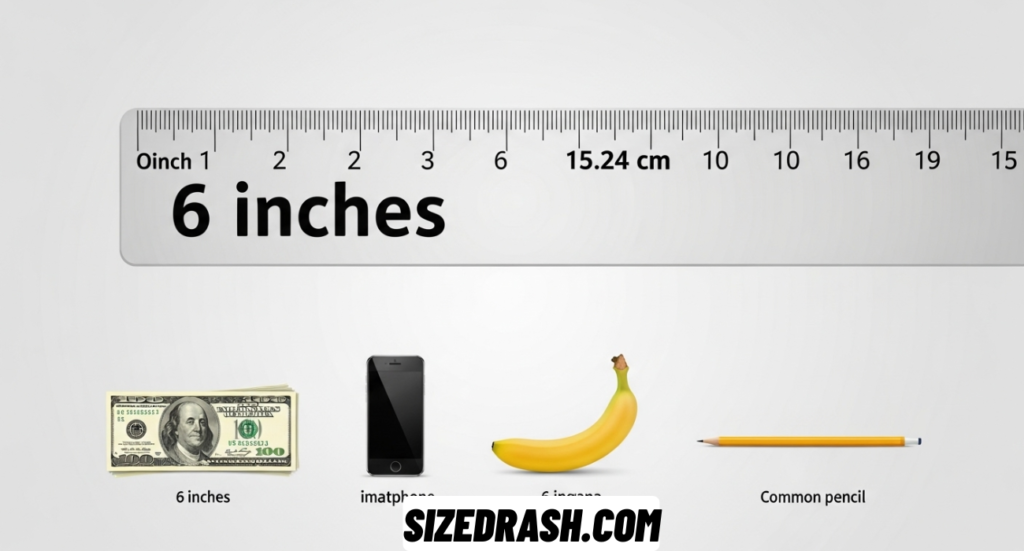
A standard ruler in the US measures twelve inches, making 6 inches exactly half its length. When you picture a ruler, the middle mark instantly becomes a mental anchor. That midpoint serves as a reliable gauge tool for judging size at a glance.
This is why rulers work so well as a measuring tool. The clear markings and fixed precise length remove guesswork. Even when you don’t have one nearby, remembering that half-ruler image gives you a dependable size comparison.
Things That Are 6 Inches Long :
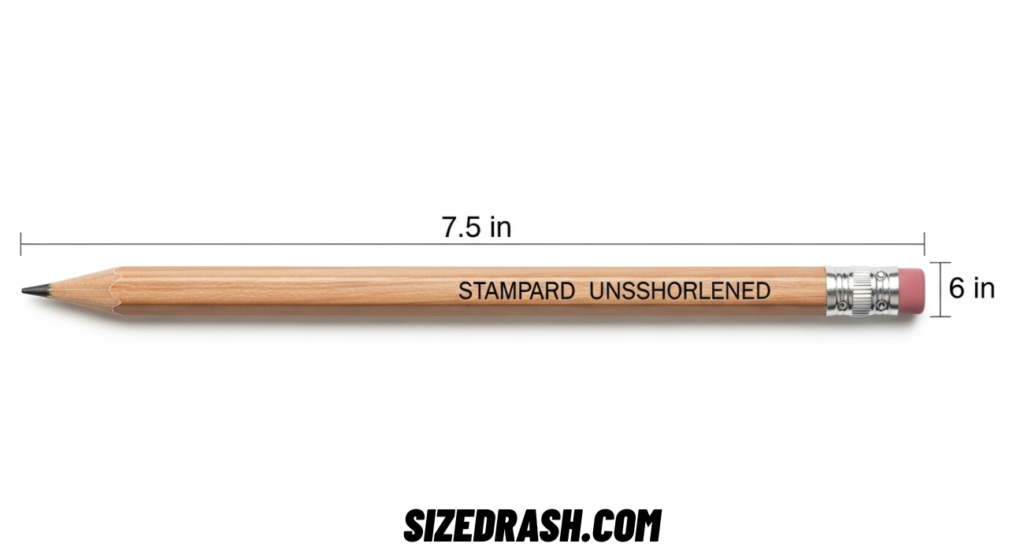
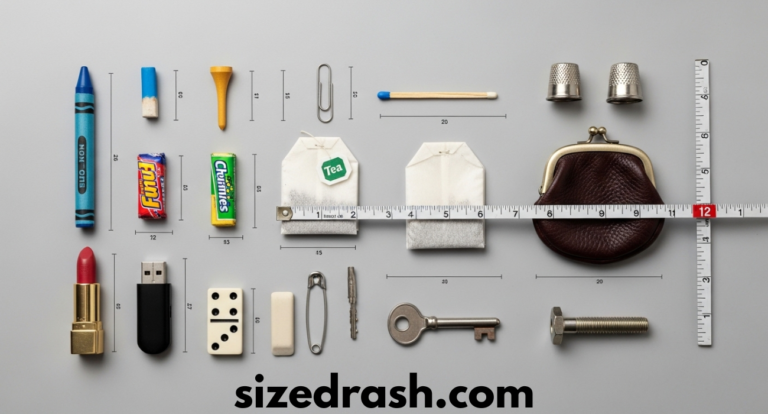
When people ask how long is 6 inches compared to an object, they usually want examples, not formulas. Some objects measure exactly six inches, while others come very close. Both still help when you need a fast, practical reference.
These common things don’t replace tools, but they work as portable measurement aids. They’re especially helpful when perfection doesn’t matter, only a clear sense of scale and proportion.
HouseHold Items That Are 6 Inches Long
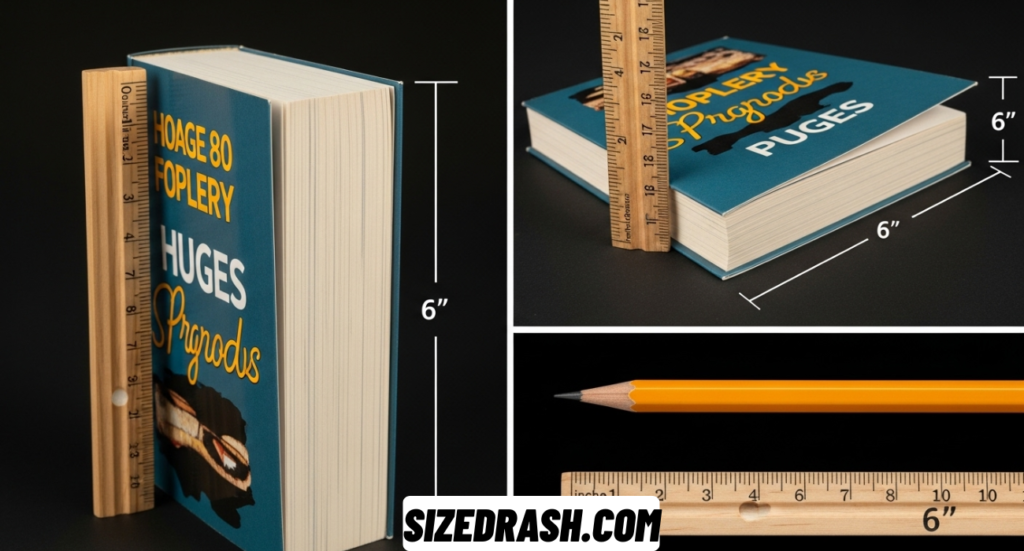
Many household items sit right around the six-inch range because that size feels comfortable in the hand. Designers often choose it for balance, grip, and usability. Over time, these objects become natural object length reference points.
Using familiar items for measuring without ruler feels intuitive. You already know how big they are. That familiarity turns everyday surroundings into a practical measuring kit without effort.
1. Using Your Hand as a Measuring Tool
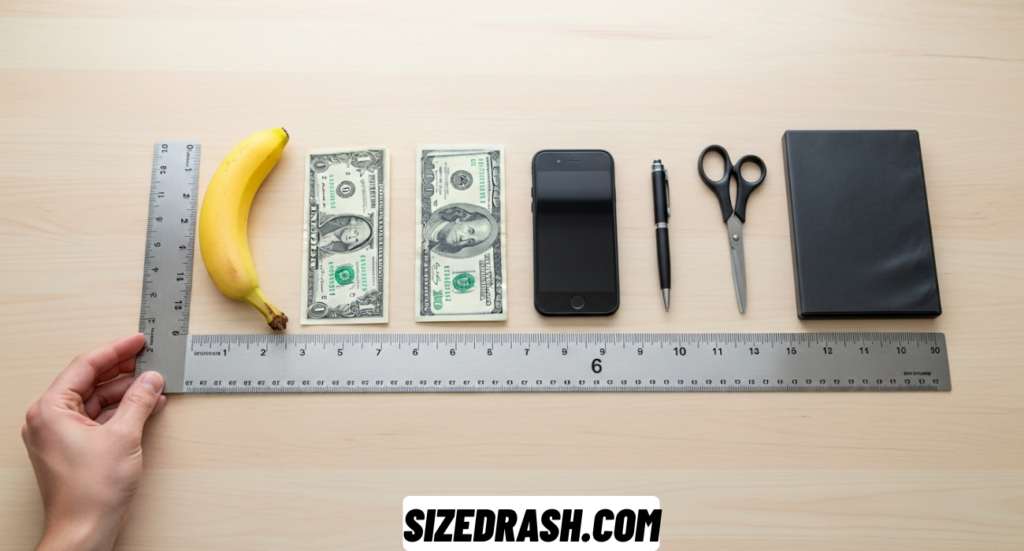
Your hand size offers one of the fastest ways to estimate 6 inches. Most adult hands in the US fall close to this length when measured from the base of the palm to near the fingertips. While not exact, it works surprisingly well.
Because your hand is always with you, it becomes a personal measuring tool. With practice, it turns into a reliable gauge tool for quick checks in daily life, especially when tools are out of reach.
2. A US Dollar Bill
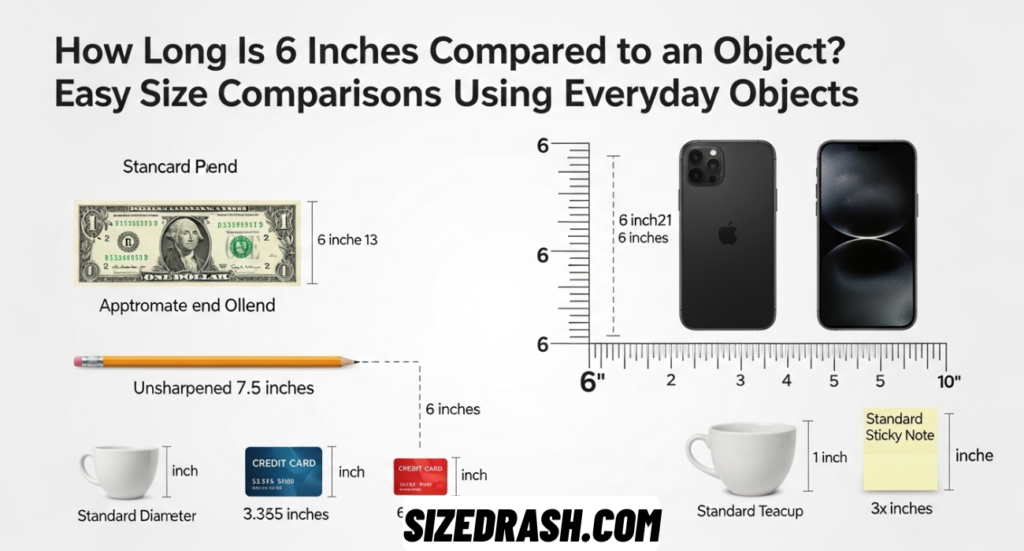
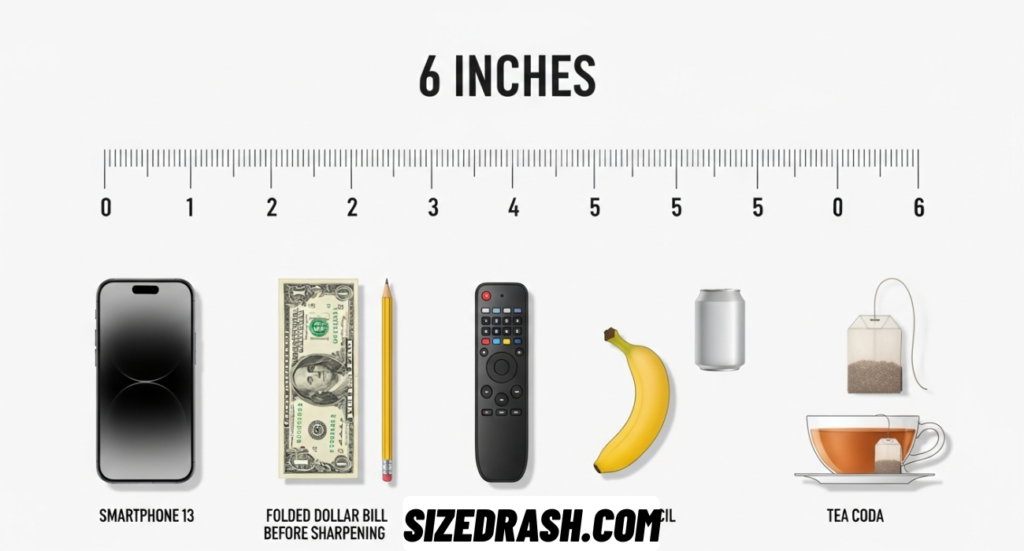
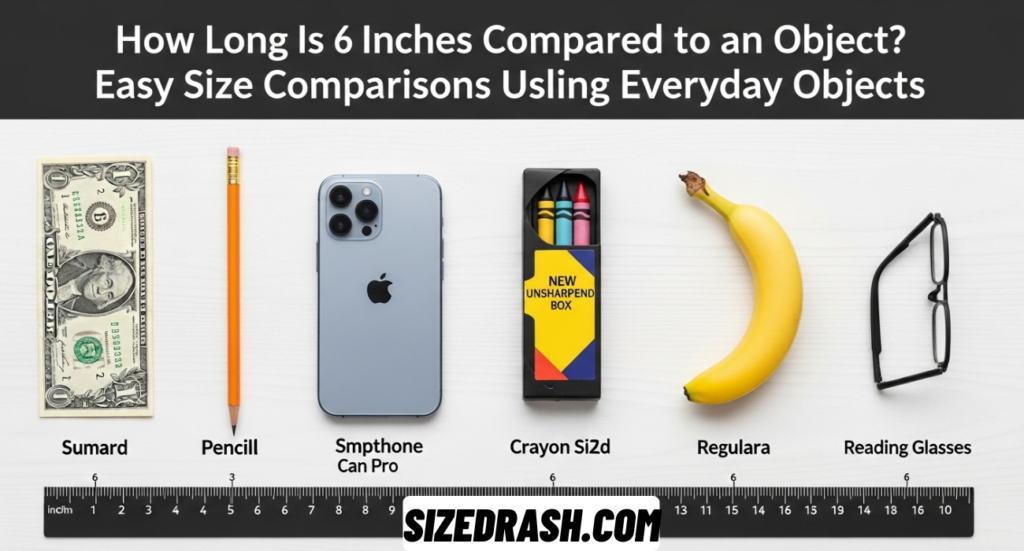
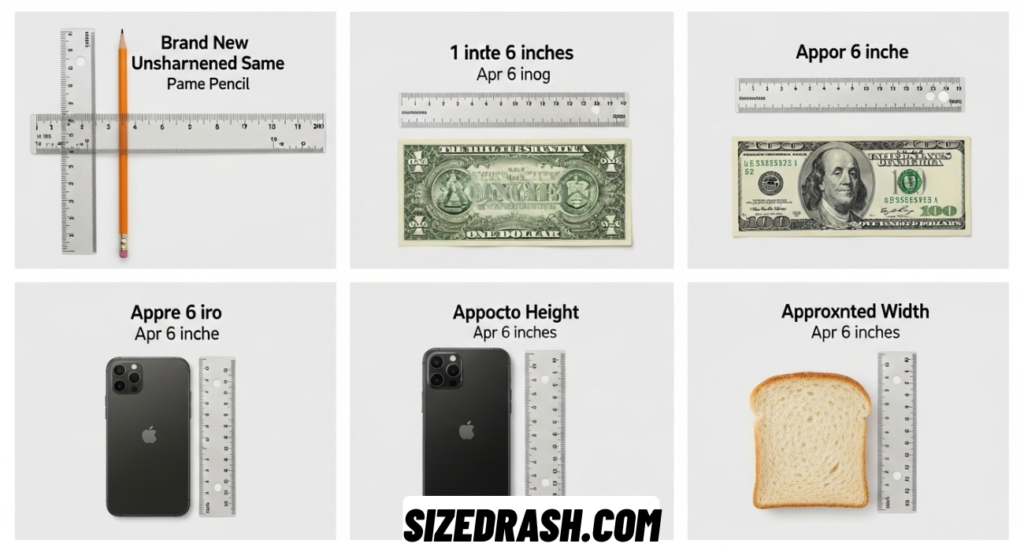
A US dollar bill measures about 6.14 inches long. That makes it one of the best common objects for estimating 6 inches. The difference is small enough that most people never notice it in real use.
Since almost everyone carries one, the bill becomes an easy reference point. It’s especially helpful for quick measurement tasks like checking spacing or sizing up small items on the go.
3. 2 Bank Cards
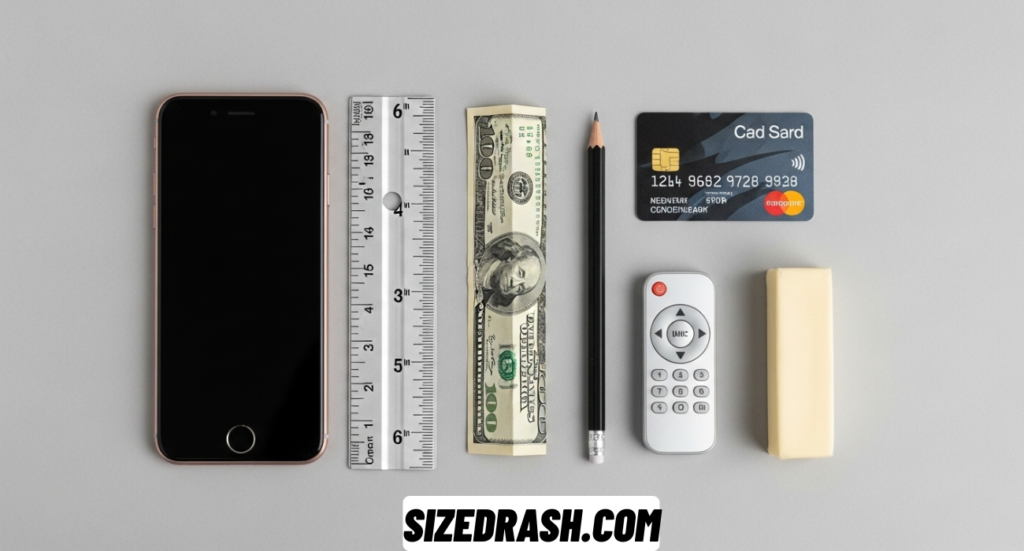
Standard bank cards follow strict sizing rules. Each card matches the official credit card size, making them consistent across the country. When you place two cards together, you get close to a six-inch comparison.
This method works well when estimating length visually. While it’s not exact, it still functions as a handy portable measurement option using items already in your wallet.
4. The iPhone 16 Pro
The iPhone 16 Pro measures just under six inches in height, making it a popular everyday object for size comparison. Its sleek shape and familiar feel make it easy to visualize.
Because phones stay with us all day, they naturally become a measuring tool. Many people unconsciously use them as a reference point when judging size in real-world situations.
5. Post-it Notes (Standard Size)
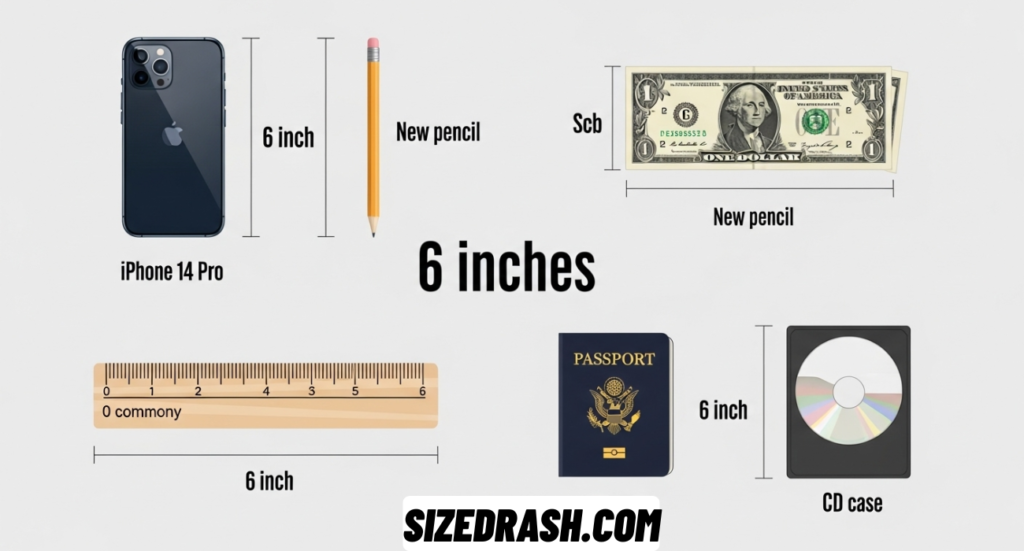
Standard Post-it notes measure three inches per side. When placed edge to edge, two notes align closely with 6 inches. This makes them useful in offices and homes alike.
Their standard size and flat shape make them perfect for visualizing size. They turn desk supplies into surprisingly effective household items for measurement.
6. Half of a Standard Ruler
Half of a ruler represents 6 inches exactly. This comparison remains the most accurate and universally understood. It’s the gold standard for mental measurement.
Once you lock this image into memory, it becomes an instant object length reference. You don’t need the ruler itself. You just need the picture.
7. A Men’s Wallets
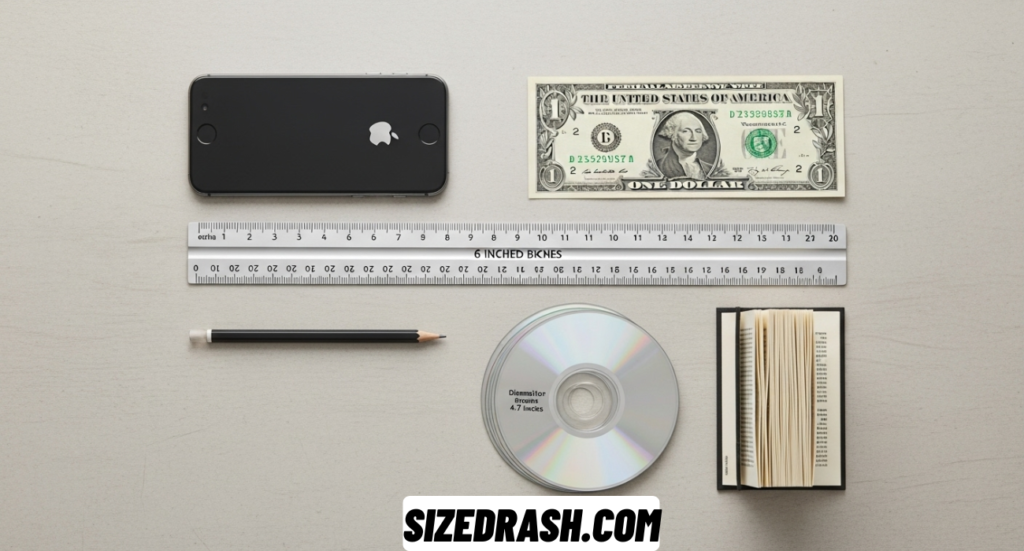
A typical men’s wallet often measures close to six inches when closed. This size allows it to hold cards and cash comfortably without feeling bulky.
Because wallets follow consistent design logic, they work well as practical benchmarks. They quietly reinforce what 6 inches feels like in everyday use.
8. A Toothbrush
A standard toothbrush usually exceeds six inches slightly. However, the handle alone aligns closely with the six-inch range, making it a usable comparison.
Since toothbrushes are universal household items, they become convenient tools for measuring without ruler, especially in bathrooms or travel situations.
9. Small Paperback Book
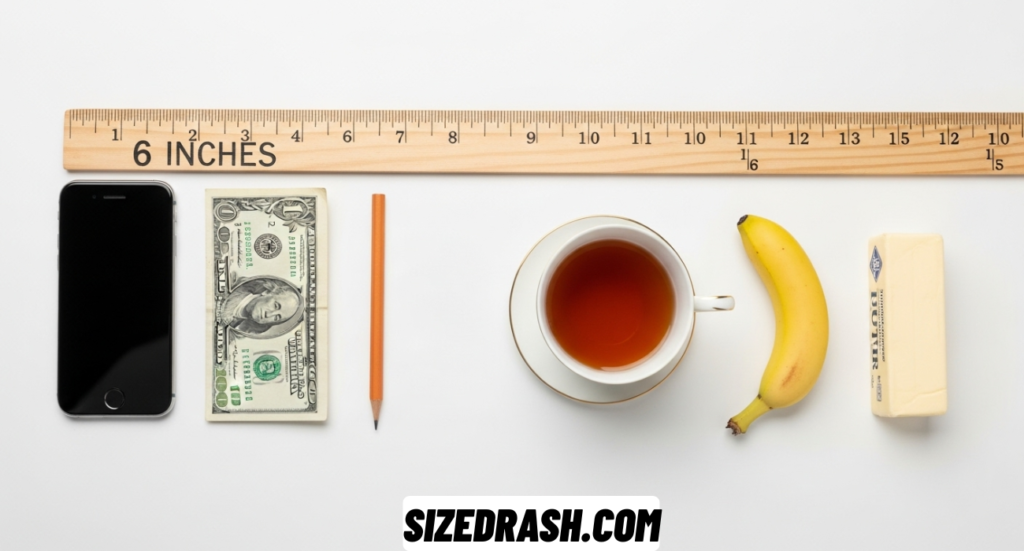
A small paperback book often measures about six inches tall. Publishers choose this size for comfort and portability.
Because books have rigid edges and fixed dimensions, they offer a solid reference point for judging length quickly and confidently.
10. A Screwdriver Handle
Many toolmakers design a screwdriver handle around the six-inch mark for balance and control. This length fits naturally in the hand.
That ergonomic choice makes the handle a reliable gauge tool. It blends function with familiarity, ideal for quick measurement tasks.
11. A Door Handle
A typical door handle falls between four and six inches. Many designs lean toward the upper end for better grip.
Since door handles appear everywhere, they quietly reinforce visualizing size through repeated exposure in daily life.
12. A Small Sized Banana
A small banana often measures close to six inches, though nature allows variation. This makes it a memorable but flexible reference.
Food-based comparisons stick in the mind. They add humor while still supporting size comparison in a practical way.
13. Two Baseballs
A regulation baseball measures just under three inches in diameter. Placing two baseballs end to end creates a length just shy of six inches.
This comparison resonates strongly in the US, where baseball is deeply familiar. It turns sports gear into a clear object length reference.
14. A Standard Pencil
A standard wooden pencil is one of the most familiar everyday objects people use in school, offices, and homes across the United States. Most new pencils measure close to seven inches when unused, but once sharpened and slightly worn, many fall very close to 6 inches. That makes a pencil a helpful object length reference when you need a quick measurement. Because pencils are straight and rigid, they make it easier to compare length visually. People often place a pencil next to an item to judge size, even without realizing they’re doing it.
This comparison works well in daily life because pencils are lightweight and easy to handle. While not perfectly exact, a pencil still acts as a practical gauge tool when a standard ruler is missing.
15. A TV Remote Control
Many TV remote controls measure close to 6 inches, especially those designed for compact streaming devices. Manufacturers often choose this size because it fits comfortably in the hand while remaining easy to store. As a result, the remote becomes a subtle but reliable reference point for visualizing size. When you hold one, your brain quickly understands what 6 inches feels like without doing any math.
Since remotes are common household items, they support measuring without ruler moments naturally. Their consistent shape and standard size make them a useful tool for casual size comparison tasks around the home.
16. A Kitchen Butter Knife
A typical kitchen butter knife usually measures around six inches from handle to tip. This length balances safety and control, which is why designers stick close to this measurement. Because butter knives are flat and straight, they work well as an informal measuring tool when estimating length.
In many homes, the butter knife becomes an unexpected portable measurement option. Its familiar shape helps with visualizing size, especially during cooking or small household tasks that need a quick check.
17. A Pair of Sunglasses (Folded)
When folded, many sunglasses measure close to 6 inches across. Designers aim for this size so the glasses fit neatly into cases and pockets. That design choice makes folded sunglasses a useful object length reference for everyday situations.
Since people often carry sunglasses while traveling, they become a handy gauge tool. This makes them helpful for quick measurement moments when accuracy matters more than perfection.
18. A Smartphone Charging Cable Plug Section
The plug section of many smartphone charging cables, including the reinforced head and connector area, often measures close to six inches. This reinforced length protects the cable from bending and damage, while also creating a consistent reference point.
Because charging cables are everywhere, they quietly assist with measuring without ruler. Their fixed design helps people judge 6 inches without consciously thinking about the measurement.
19. A Small Desk Calendar
Many small desk calendars stand about six inches tall. This size allows them to remain readable without taking up too much space. Because calendars stay in one spot, people often use them as visual anchors for size comparison.
In offices and homes, desk calendars serve as steady household items that reinforce what 6 inches looks like. Over time, this repeated exposure strengthens your instinct for visualizing size.
20. A Paperback Notebook
A compact paperback notebook often measures close to six inches in height. This size works well for portability while still offering enough writing space. Students and professionals alike rely on these notebooks daily, which makes them excellent practical benchmarks.
Because notebooks have clean edges and a consistent precise length, they function well as an object length reference. They quietly support quick measurement needs in real-world situations.
21. A Travel-Size Shampoo Bottle
Many travel-size shampoo bottles are designed to be around six inches tall. This allows them to fit airline regulations while remaining easy to grip. That design choice makes them a useful everyday object for estimating length.
Since travel bottles appear frequently in bathrooms and luggage, they reinforce 6 inches as a mental reference point. They work especially well for measuring without ruler during travel or packing.
FAQs
What common objects are about 6 inches long?
A US dollar bill, two bank cards stacked, a small paperback book, a men’s wallet, and even a toothbrush handle are all roughly six inches.
How can I measure 6 inches without a ruler?
Use your hand, a smartphone, a standard Post-it note, or household items like pencils or remote controls as a quick gauge tool.
Is 6 inches the same in centimeters?
Yes, 6 inches equals 15.24 centimeters or 152.4 millimeters, useful for converting between imperial system and metric system.
Can food items help me visualize 6 inches?
Absolutely! A small banana or two baseballs end-to-end can act as fun and practical reference points for visualizing size.
Conclusion
Understanding how long is 6 inches compared to an object helps us in many small daily tasks. Using common things like a US dollar bill, a men’s wallet, or two baseballs, we can see and feel what six inches really looks like. Knowing this length makes it easier to arrange items, hang pictures, or pack bags without needing a ruler every time. Everyday objects act as simple measuring tools and provide quick practical benchmarks. Even simple items like a toothbrush, a small paperback book, or Post-it notes give a good sense of length. This knowledge builds confidence in visualizing size and makes everyday chores faster and more accurate.
By comparing 6 inches to household items and other familiar things, we can quickly understand size in daily life. People can use their hand size or objects around them as portable measurement references. Remembering these standard sizes turns abstract numbers into something real and easy to see. Using objects as reference points allows anyone to estimate 6 inches accurately and naturally. This skill is practical and helpful in school, at home, or even outdoors. Understanding how long is 6 inches compared to an object makes measurement simple, useful, and part of everyday activities.