20 Feet – Understanding the Size, Length, and Scale in Real Life
20 feet is a measure of length. It equals 6.096 meters, 240 inches, or 609.6 centimeters. People use it to know how long or tall something is.
Imagine a space as long as a two-story building or four park benches in a row. 20 feet can feel big or small depending on what you compare it to.
This length shows up in many places. 20 feet matches a giraffe’s height, a small swimming pool’s width, or a standard shipping container. It helps with planning, measuring, and building.
How Long is 20 Feet?
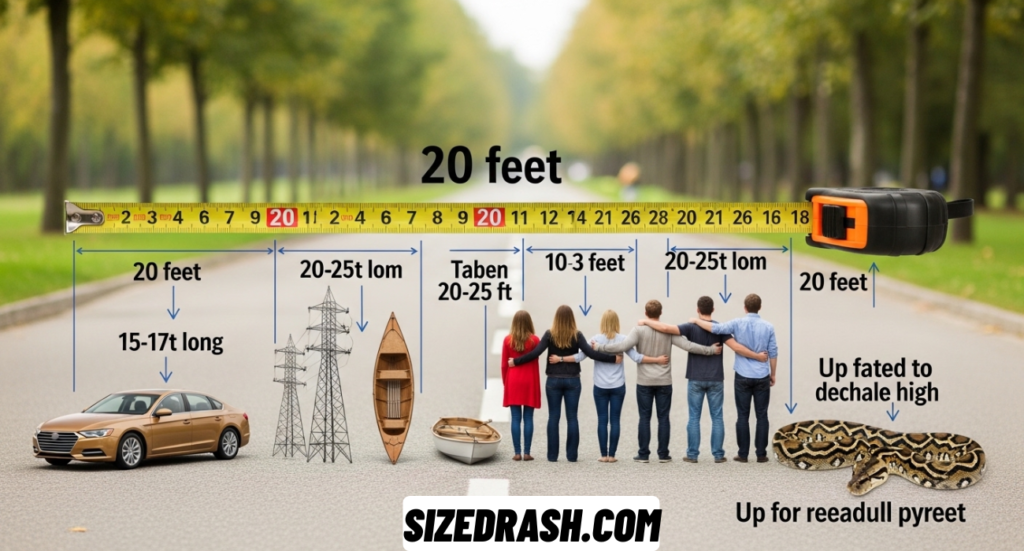
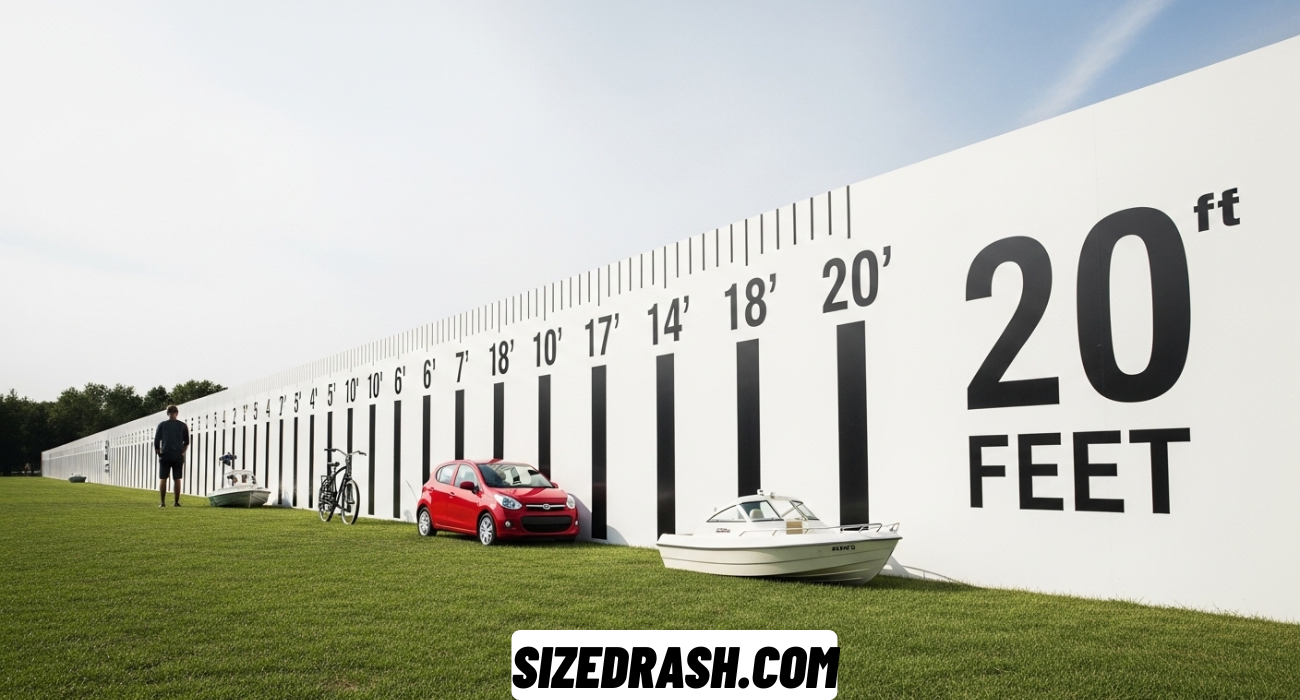
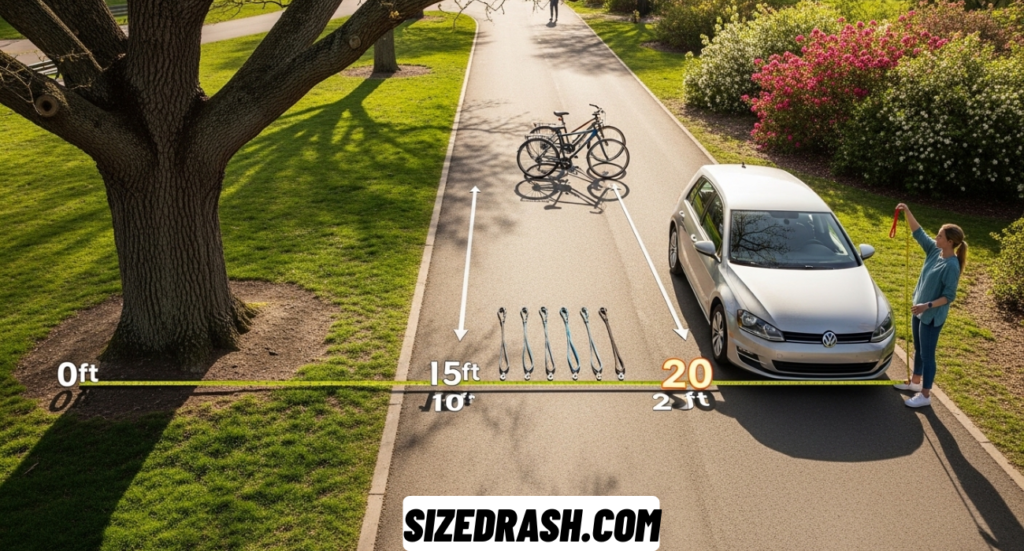
20 feet is easy to confuse if you only look at numbers, but comparing it to common items brings clarity. This length equals 6.096 meters or 609.6 centimeters, which is slightly longer than two mid-sized cars parked bumper-to-bumper. You can also think of it as the length of a standard shipping container, commonly used in industrial logistics and modular storage, providing a familiar reference for the scale of 20 feet.
In everyday situations, 20 feet can help with spatial planning and construction projects. Designers often use it to compare dimensions for indoor and outdoor layouts, such as room lengths or garden pathways. Understanding this measurement in multiple units, from yards to inches, improves accuracy when converting lengths and ensures your placement of objects or installations meets both practical and visual standards.
| Unit | Equivalent of 20 Feet |
| Meters | 6.096 m |
| Inches | 240 in |
| Centimeters | 609.6 cm |
| Yards | 6.67 yd |
How to Measure 20 Feet by Steps
Measuring 20 feet without tools is simple if you use your own stride. On average, an adult step equals roughly 2.5 feet, so it takes about 8 steps to cover 20 feet. This human-friendly step calculation allows you to estimate distance quickly in homes, parks, or construction sites, offering practical accuracy when measuring objects or designing spaces.
Using steps for measurement techniques can be surprisingly precise if you maintain a consistent stride. Architects and planners sometimes combine stride calculations with digital measuring devices for better results. Understanding your personal step and using proportional visualization gives a tangible sense of length in real-world applications, from arranging furniture placement to checking outdoor spacing or installation distances.
Read Also;100 Feet Long: Understanding the Length of 100 Feet Through Real-World Examples
Items That Are 20 Feet Long or Big
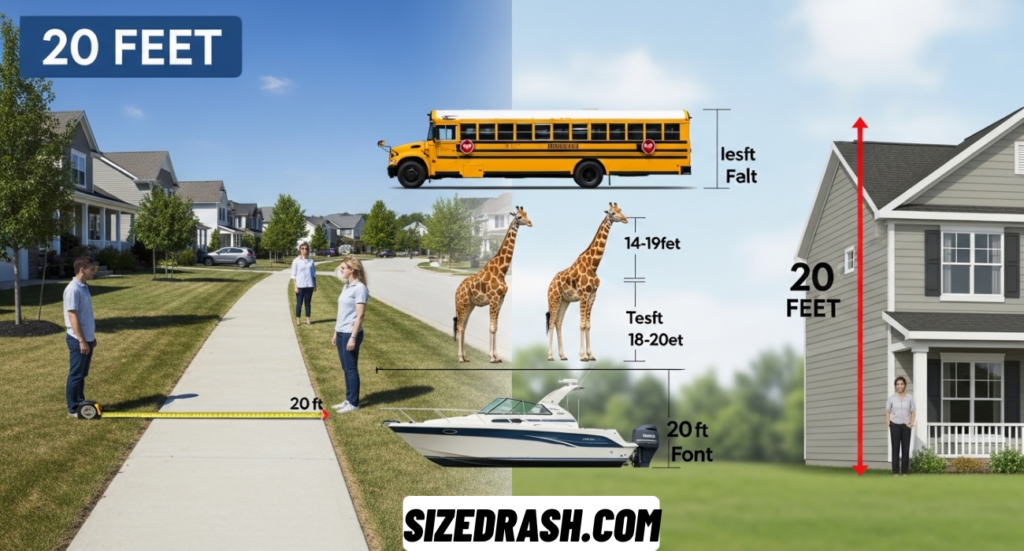
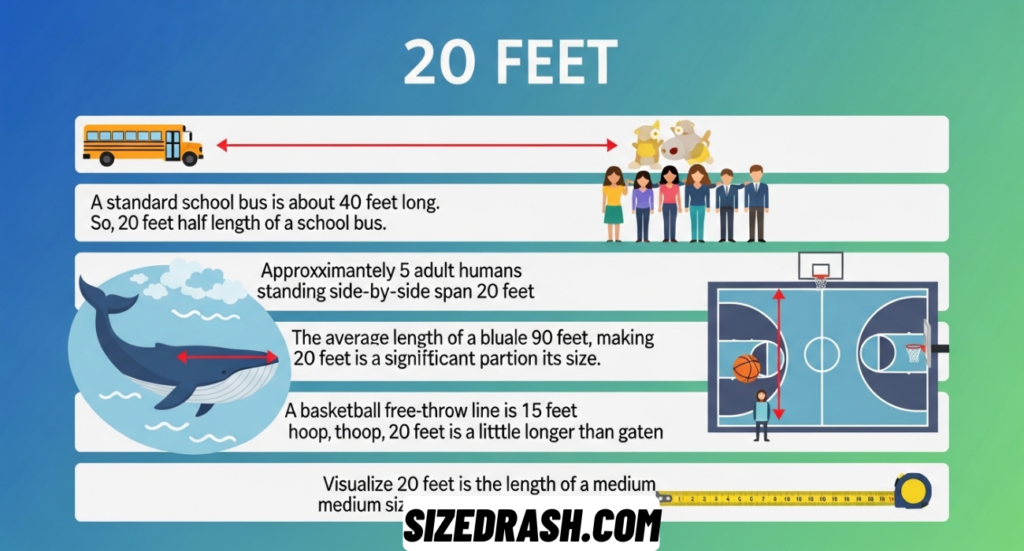
Seeing 20 feet in relation to real objects helps you visualize the scale. Everyday items provide reference points that are easier to grasp than numbers alone. Two-story buildings, park benches, André the Giant, London buses, giraffes, and newborn blue whales all illustrate how this length fits into real-world settings. Using these familiar objects improves spatial planning, construction, and design estimation.
For professionals and hobbyists alike, visual comparison allows better accuracy in placement and spacing. Comparing 20-foot dimensions to both indoor and outdoor references, such as flagpoles, shipping containers, ladders, swimming pools, or basketball hoop heights, ensures your planning, home improvement, or professional projects match standard sizes and functional requirements.
1. A 2 Story Building
A typical two-story building reaches about 20 feet in height, with each story averaging 10 feet. This building height offers a familiar frame of reference for the scale of objects or structures. When planning home improvements, roof installations, or construction, understanding a two-story building’s dimension helps you visualize vertical spacing.
Even casual observation of a two-story home can provide a quick visual comparison for 20-foot measurements. Professionals often use this reference for architecture, urban design, and spatial planning, ensuring proper placement of ladders, flagpoles, and outdoor structures, while also maintaining safety and functional circulation.
2. Length of Four Park Benches
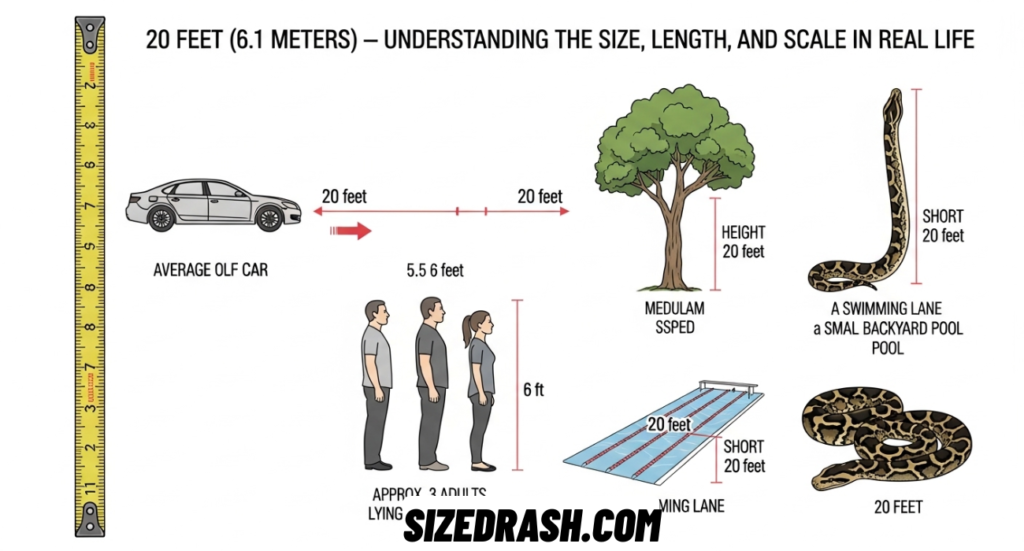
Four standard park benches end-to-end create a length of about 20 feet, offering a practical urban design reference. Public planners and landscape architects use such seating arrangements to gauge pedestrian spacing and social distancing. Visualization of benches provides a concrete example of object scale in outdoor spaces, aiding functional placement in parks, plazas, or gardens.
Using benches as a measurement technique also helps with home improvement or DIY layouts, where understanding spacing and circulation is critical. This practical example makes the dimension of 20 feet relatable, giving you a tangible distance reference without requiring precise tools, while reinforcing visual and spatial estimation skills.
3. Three Times as tall as André the Giant
André the Giant stood about 7 feet tall, so three times his height roughly equals 20 feet. This comparison provides a human-friendly reference, making large-scale measurements easier to visualize. In construction, planning, or spatial design, using human-sized objects improves the accuracy of estimating distance and placement.
Thinking about André the Giant stacked gives perspective on the height of objects or structures. Architects and planners often rely on similar familiar references to scale buildings, playground equipment, or outdoor installations. This comparison is especially useful for teaching proportional visualization to beginners or clients unfamiliar with standard measurements.
4. Three-fourths as long as a London bus
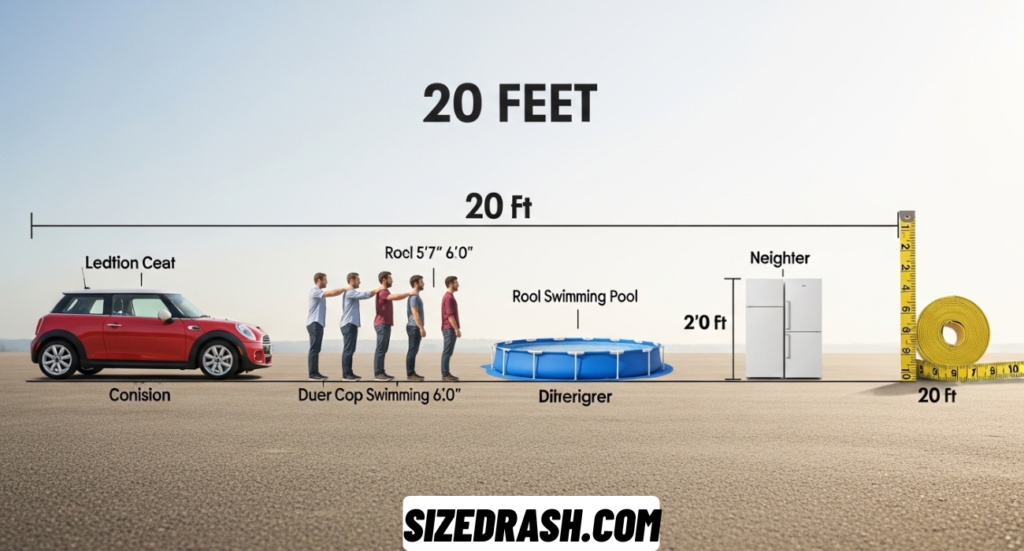
A classic London bus measures around 27.5 feet, so ¾ of that length equals about 20 feet. Using an iconic bus as a reference creates a strong visual comparison for length, helping construction professionals or home designers grasp distances that seem abstract. It also connects international scale with familiar urban objects.
When comparing to real-world U.S. contexts, imagining the London bus beside American cars or playground layouts allows easier spatial planning and safety estimation. This method enhances accuracy in object placement, functional design, and construction measurement, giving a tangible sense of dimension and distance in practical scenarios.
5. A Giraffe
An adult giraffe can reach about 18–20 feet, making it a striking wildlife reference for visualizing height. Observing a giraffe in the wild or at a zoo provides a natural example of tall structures, helping you estimate vertical space for ladders, flagpoles, or trees. Using animal scale often makes measurements memorable and intuitive.
This visual comparison is particularly helpful in architecture and urban design, where proportional visualization of objects ensures safety and functionality. By imagining a giraffe next to a two-story building, you can better plan spacing, circulation, and object placement, reinforcing practical understanding of 20-foot measurements.
6. New Born Blue Whale
A newborn blue whale measures about 23 feet, slightly over 20, providing an impressive ocean giant reference. Even at birth, these whales weigh 6,000–8,000 pounds, highlighting the enormity of this length. Comparing 20 feet to a blue whale emphasizes object scale beyond everyday human experience, enriching proportional visualization.
For educational, scientific, or construction contexts, the whale provides a dramatic real-world example of size and dimension. Using this measurement comparison, professionals can convey the significance of large-scale planning, installation spacing, or object placement, helping clients or students visualize abstract lengths in an engaging and memorable way.
7. The Flagpoles
A 20-foot flagpole is standard for residential or outdoor installations, providing ideal height and visibility without exceeding practical limits. Proper placement ensures aesthetic appeal while maintaining safety and circulation around structures. Professionals recommend this size for functional and visual balance in gardens, yards, or public spaces.
Installing a flagpole of this dimension demonstrates real-world accuracy in measurement, placement, and height estimation. Comparing it to two-story buildings or trees gives immediate perspective, helping residential planners, architects, and homeowners make informed choices for design and installation that fits both visual and functional needs.
8. Shipping Containers
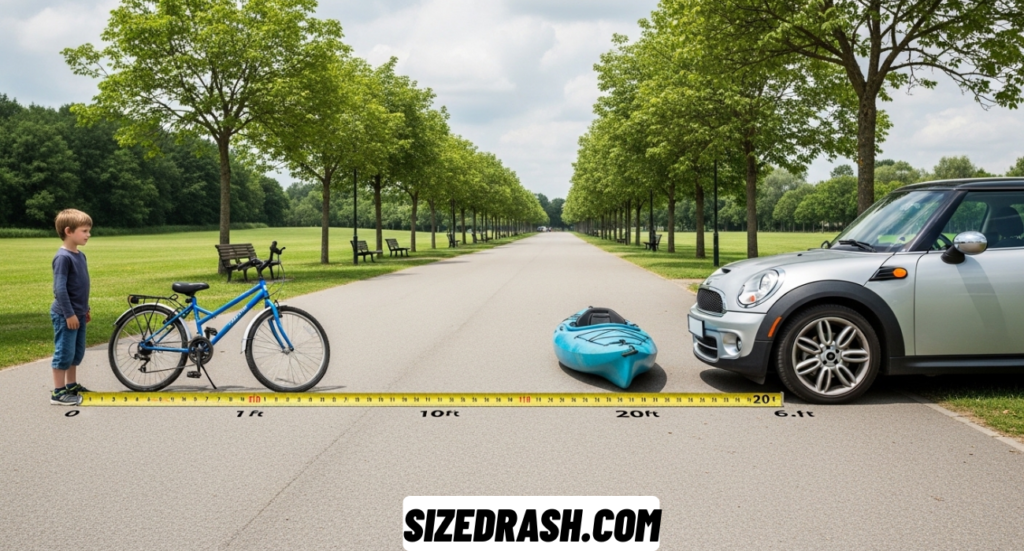
Standard 20-foot shipping containers are widely used in modular storage, construction, and international trade. Their precise dimensions allow consistent cargo flow, supply chain efficiency, and accurate placement in ports or warehouses. As a practical reference, these containers make 20 feet tangible for designers, logistics planners, or anyone managing space and scale.
Using a shipping container as a measurement tool enhances visual comparison and functional planning. Professionals rely on these standard sizes to organize materials, equipment, or modular construction projects, emphasizing accuracy, safety, and effective spatial utilization. It’s a perfect real-world scale reference for 20-foot lengths.
9. Measuring Tools
Measuring tools like tape measures, rulers, and digital devices are essential for 20-foot measurements. They provide accuracy, precision, and convenience, whether for home improvement, construction, or professional design. Using both imperial and metric systems ensures length conversions are reliable and helps visualize distances in multiple contexts.
Digital measuring devices improve accuracy and speed, while traditional tapes give a human-friendly step method for quick stride estimation. Professionals combine tools and visual comparisons to ensure correct placement, spacing, and installation, maintaining safety, functionality, and aesthetic balance in both indoor and outdoor projects.
10. Ladders
A 20-foot extension ladder is common in construction, maintenance, and painting projects. Its height allows safe access to two-story buildings or elevated installations. Professionals use these ladders for precise placement, overlap, and secure positioning, ensuring tasks are efficient and safe while maintaining functional circulation in workspaces.
Understanding a 20-foot ladder in comparison to buildings or trees helps visualize the height, assisting in planning, spacing, and safety measures. This real-world reference ensures projects stay within standard sizes, supports home improvement, and provides an intuitive grasp of object scale without relying solely on numeric measurements.
11. Indoor Swimming Pool Width
A 20-foot wide indoor swimming pool balances functionality, circulation, and aesthetics. This standard size allows lap swimming, casual exercise, and efficient spatial planning without requiring structural changes. Proper placement ensures safe movement around the deck, furniture, and pool accessories while maintaining visual harmony.
Designers consider 20-foot width ideal for both residential and commercial spaces. Using this dimension helps plan installation, pool circulation, and safety equipment placement. Comparing the width to familiar objects like park benches or ladders makes it easier to visualize the pool’s real-world scale.
12. 2 Basketball Hoop Height
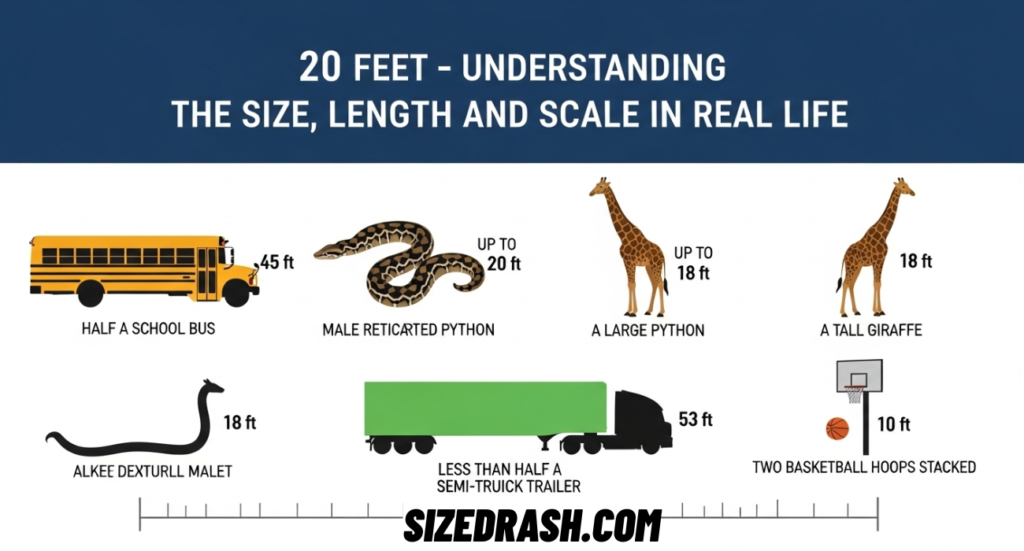
Stacking two basketball hoops equals approximately 20 feet. Standard rims measure 10 feet, so this dimension gives a clear visual reference for vertical space in gyms, playgrounds, or backyards. Professionals use this scale to ensure placement, spacing, and safety while designing courts or training areas.
Comparing 20-foot heights to familiar objects, like trash cans or ladders, makes the measurement relatable. Coaches, planners, and home gym designers use this reference for functional design, accurate installation, and proportional visualization, providing practical knowledge of height and distance for everyday use.
What Does 20 Feet Look Like Next to a Basketball Court?
A standard basketball court measures 94 feet long and 50 feet wide. 20 feet covers about one-fifth of the court’s length and nearly 40 percent of its width, offering a practical visual comparison for indoor spacing, court design, or sports planning. This reference helps visualize distances and ensures correct placement of players or equipment.
Using the basketball court as a real-world example makes 20-foot dimensions easier to understand, estimate, and plan. Coaches, trainers, and event organizers can compare measurements to ensure proper circulation, safety, and functionality while using the visual scale for practical training or recreational design.
13. Garden Fences
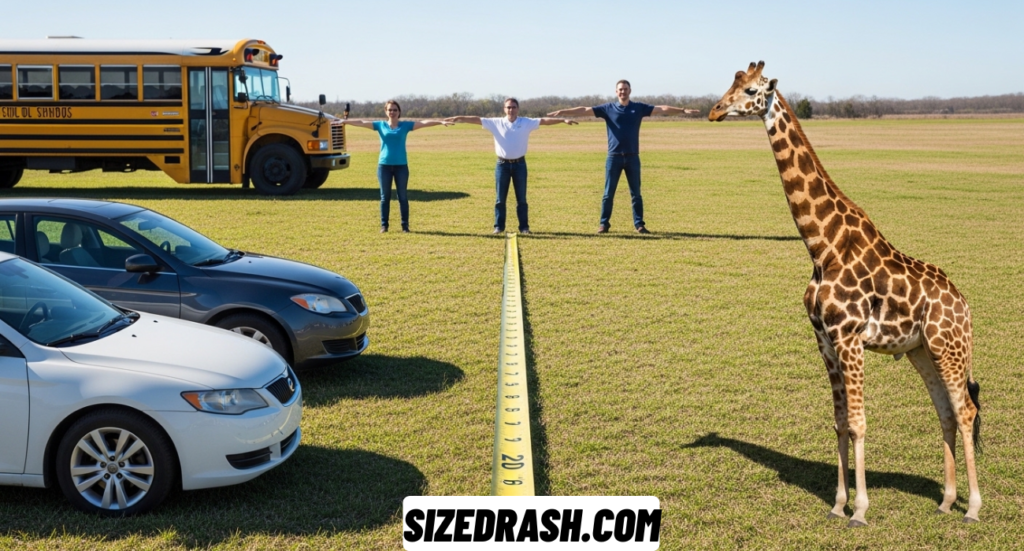
A 20-foot garden fence is a common choice for creating a clear boundary or dividing spaces in outdoor design. This length is long enough to provide privacy while keeping the scale proportional to your yard. Homeowners and landscape designers use visual comparison with two-story buildings, park benches, or flagpoles to ensure fences match surrounding objects for balanced placement and safety.
Installing a 20-foot fence also helps with spatial planning and functional circulation. By aligning fences with walkways or garden paths, you maintain smooth movement while defining property limits. Professionals often combine measuring tools, stride calculations, and proportional visualization to achieve accurate placement, distance, and height, creating an aesthetically pleasing and practical garden layout.
14. Driveway Length
A 20-foot driveway accommodates most cars and small SUVs, making it ideal for residential home improvement or urban planning. This length is easy to visualize by comparing it to four park benches or the length of André the Giant stacked three times. Designers use this scale to ensure functional placement of vehicles and safe spacing for pedestrians.
Planning a 20-foot driveway involves checking distance, width, and circulation. Homeowners and contractors rely on measuring tools, visual comparison, and stride calculation to ensure accurate installation. Understanding this dimension allows proper spacing for gates, landscaping, or walkways, maintaining both safety and aesthetics in your outdoor area.
15. Rooftop Solar Panels
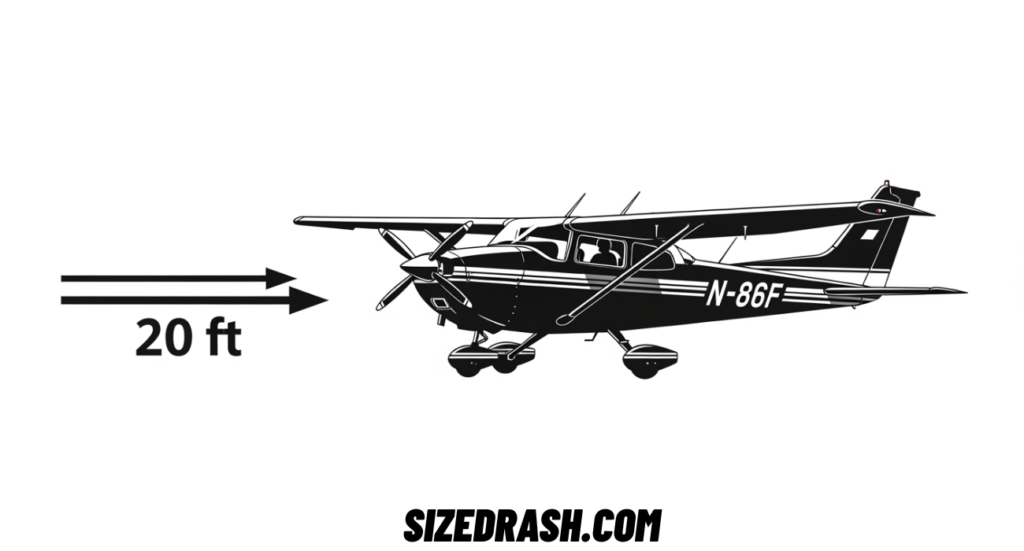
Installing 20-foot solar panels on rooftops is common for maximizing energy efficiency while fitting standard roof dimensions. This length is practical for home improvement projects and ensures proper placement without overloading structures. Architects use real-world comparison with two-story buildings or flagpoles to visualize scale and plan installation angles.
Accurate measurement is critical when installing 20-foot solar panels. Professionals rely on digital measuring devices, measuring tapes, and stride techniques to calculate roof spacing, circulation, and alignment. Understanding the height, width, and distance from edges ensures safe, functional, and efficient energy systems, combining precision, design, and practical placement.
16. Playground Slides
A 20-foot slide in a playground provides enough length for fun without compromising safety or functionality. This dimension can be compared to a two-story building or the length of a London bus for quick visualization. Designers consider spacing, circulation, and height while ensuring children’s safety and accessibility during play.
Using measuring tools, stride calculations, and proportional visualization ensures slides fit the playground layout correctly. Proper placement prevents overcrowding, provides enough room for seating or benches, and maintains clear circulation paths. Understanding 20-foot measurements in a playful context makes both planning and installation more efficient and accurate.
17. Tennis Court Net Length
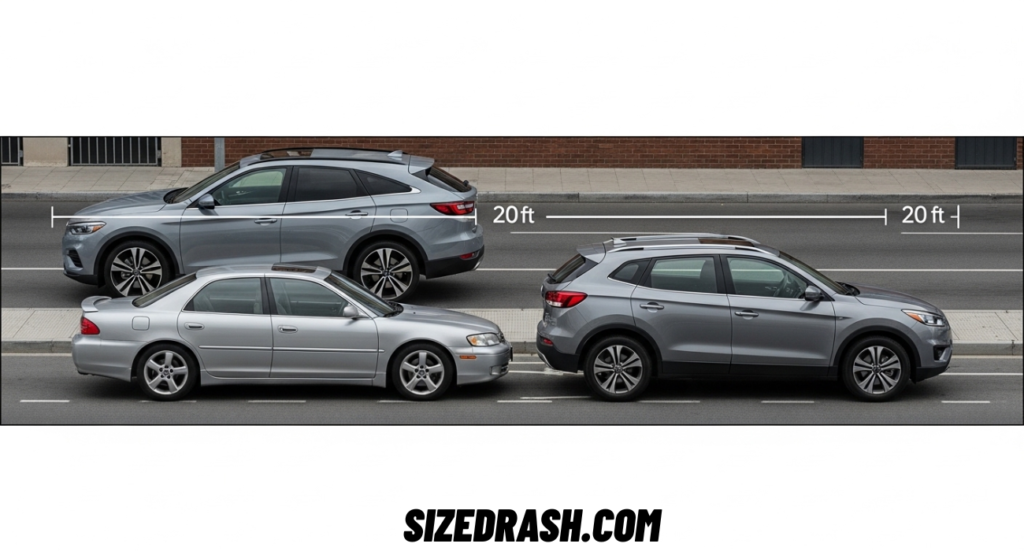
The standard tennis court net spans about 20 feet, making it a practical reference for visual comparison. This dimension helps players, coaches, and planners understand distance, placement, and functional spacing in sports facilities. Comparing it to familiar objects like park benches or a flagpole makes the length easier to grasp.
Installing a 20-foot net requires precise measurement techniques to ensure tension, alignment, and stability. Using digital devices, tape measures, and stride estimation, professionals maintain proper circulation, spacing, and safety. This helps maximize functional performance while keeping the sports area safe, proportionate, and visually appealing for recreational or professional use.
18. Small Boat Length
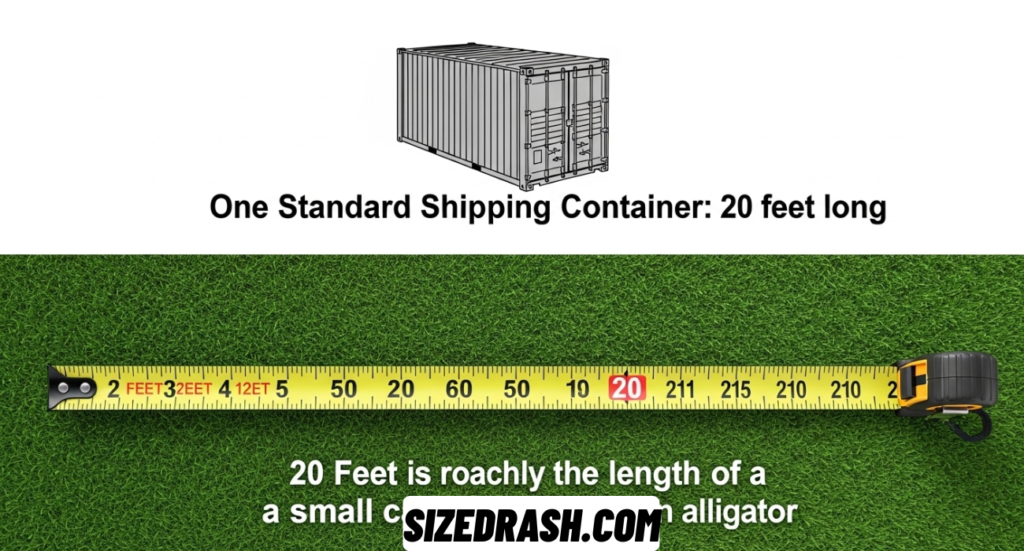
A 20-foot boat is typical for recreational use, fitting easily in private docks or marinas. This length can be visualized by comparing it to André the Giant three times or three-fourths the length of a London bus. Using real-world references helps boat owners, designers, and dock planners understand scale and placement effectively.
Planning for a 20-foot boat involves considering distance, docking space, and circulation. Professionals use measuring tools and stride calculations to position the boat safely while ensuring functional accessibility. Understanding dimensions and scale allows smooth docking, proper spacing between vessels, and safe navigation in limited areas, making it practical for recreational or professional use.
19. Outdoor Pergola
A 20-foot pergola provides shade and aesthetic appeal in gardens or patios. This length can be visualized by comparing it to two-story buildings, park benches, or flagpoles to understand placement and scale. Designers use these references to maintain functional spacing and balance in outdoor home improvement projects.
Installing a 20-foot pergola requires accurate measurement techniques, digital devices, and tape measures. Proper distance, height, and alignment ensure circulation, safety, and visual harmony with existing structures. By applying proportional visualization, professionals create functional, attractive, and practical outdoor spaces suitable for gatherings, relaxation, or decorative landscaping.
20. Garage Door Width
A 20-foot garage door is ideal for double-car garages or small commercial spaces. Understanding this length helps homeowners and builders visualize placement and spacing in relation to driveways, fences, or ladders. Comparing it to familiar objects ensures accurate installation and proportional design.
Installing a 20-foot door requires precision, measurement, and functional planning. Using digital devices, tape measures, and stride calculations, professionals ensure proper placement, height alignment, and smooth operation. This ensures both safety and usability, creating an efficient and practical garage that blends aesthetic design with everyday functionality.
FAQs
What is 20 feet in meters, inches, and centimeters?
20 feet equals 6.096 meters, 240 inches, or 609.6 centimeters, making it easy to convert for different measurement systems.
How many steps does it take to walk 20 feet?
On average, it takes about 8 adult steps to cover 20 feet, assuming a normal stride of 2.5 feet per step.
What everyday objects are about 20 feet long?
Objects like a two-story building, four park benches, a giraffe, or a shipping container are roughly 20 feet, offering practical visual comparisons.
How does 20 feet compare to a basketball court?
20 feet is about one-fifth of a standard basketball court’s length and nearly 40% of its width, helping you visualize scale on the court.
Conclusion
Understanding 20 feet helps you see how long or tall things really are in the world. 20 feet equals 6.096 meters, 240 inches, or 609.6 centimeters, and it is the same as the height of a two-story building, the length of four park benches, or almost three-fourths of a London bus. Knowing this measurement makes planning, building, and spacing objects easier. People use stride calculations, measuring tools, and visual comparisons to make sure things fit safely and correctly. Seeing 20 feet in real life gives a clear idea of size, distance, and placement for homes, schools, playgrounds, and parks.
Objects that are 20 feet long help you learn about scale and proportion. From giraffes and newborn blue whales to flagpoles, shipping containers, ladders, and swimming pools, this length shows how different things compare. Using practical measurements and accurate tools makes projects safer and more precise. 20 feet also helps with spacing in sports, gardens, and construction work. When you can visualize and measure this size, you plan better, build smarter, and understand the world around you more clearly.