How Much is 10 Grams? Understanding Everyday Weight in the USA
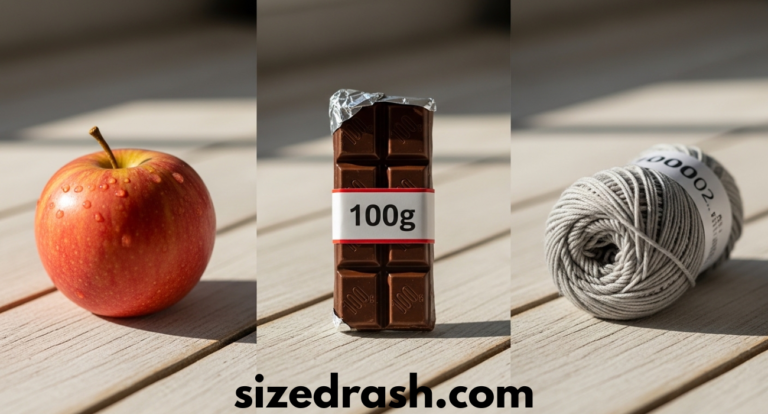
How much is 10 grams means the weight of small objects that are very light. Ten grams is a tiny part of a kilogram. It is equal to 0.35 ounces in the imperial system.
You can find 10 grams in many everyday items. Small objects like coins, paper clips, or a coffee scoop help you see this weight. It is easier to understand when you compare real things.
Knowing how much is 10 grams helps in the kitchen, school projects, and household tasks. It shows the mass of tiny objects. You can use it to measure and compare objects quickly.
How Heavy is 10 Grams?
When you think about 10 grams, it’s important to put it into perspective. A single dime weighs about 2.268 grams, so four dimes almost equal 10 grams. Similarly, a few pennies or a nickel can give you the same mass. Understanding the equivalence between the metric system and imperial system helps you compare weights more accurately. This is useful in the kitchen or when using scales for household items.
In everyday life, 10 grams is very light. It’s roughly the same weight as two sheets of A4 paper, ten paper clips, or a coffee scoop of ground coffee. These small objects make it easy to appreciate the nuance of weight in units that might otherwise seem abstract. Visualizing 10 grams can help you calibrate scales or adjust measurements for a recipe, project, or even while handling office supplies.
Things That Weigh 10 Grams :
It’s easier to understand 10 grams when you see it in real life. Many everyday items weigh around this light weight, and they provide a practical reference for measurement. From coins to household items, these examples help you visualize the combined weight in a fun and meaningful way. Tiny tools and objects that seem insignificant can still give you a sense of mass.
Knowing how much is 10 grams can also make you more accurate in the kitchen, while handling office supplies, or even while collecting coins. For example, nickels and pennies are excellent for understanding metal content and economic value, while a coffee scoop shows you a precise conversion of grams to tablespoons. Let’s look at some specific examples.
1. Four US Penny
A single penny weighs about 2.5 grams, so four pennies equal 10 grams. These coins are made of copper and zinc, which affects their metal composition. Over time, their value has remained consistent, making them an easy reference for weight. You can visualize this small object as a practical tool to calibrate scales or teach kids about measurement.
In addition, knowing how much 10 grams is using pennies helps coin collectors understand historical objects and metal content. Comparing four pennies with two nickels or a 20 pence coin gives a clear equivalence. This fraction of a kilogram is easier to appreciate when you see it in tiny tools like coins.
2. A Coffee Scoop
A standard coffee scoop holds about 10 grams of ground coffee, which is roughly two tablespoons. The size of the scoop may vary depending on the material, but it gives a very accurate measurement. Knowing this helps you get the perfect coffee experience every time, as a small fraction of weight can affect the outcome of your brew.
Measuring coffee is not the only use. The scoop shows how light weight 10 grams is, compared to dimes, pennies, or paper clips. It’s a practical example in the kitchen, allowing you to adjust measurement for recipes and understand nuance in weight. Even small differences can influence outcomes in baking or cooking.
3. Ten Paper Clips
Ten paper clips weigh roughly 10 grams. Each standard size paperclip weighs about 1 gram. These lightweight tools are common in offices and schools, where they help secure papers. You can also use jumbo paper clips to slightly exceed 10 grams, which demonstrates combined weight in a clear way.
Using paper clips as a reference allows you to visualize mass with tiny objects. They are easy to find and make understanding 10 grams fun and practical. Comparing them to thumbtacks or pennies creates a useful quick reference for projects, office supplies, or even household items.
4. Two Sheets of A4 Paper
Two sheets of A4 paper, each around 5 grams depending on gsm, combine to make 10 grams. This simple example is perfect for visualizing small weights. The thickness and type of paper can slightly affect the weight, which is important for precise measurement in projects or office tasks.
This is a clear way to appreciate nuance in weight. It helps you compare lightweight tools like paper clips and thumbtacks, giving a hands-on reference for everyday items. You can even use this for school experiments or kitchen measurement exercises.
5. Ten US Dollar Bills
A single US dollar bill weighs about 1 gram, so ten bills equal 10 grams. Handling dollar bills gives you a tangible sense of weight. Their lightweight design and polyester resin material make them practical for daily use, and knowing this helps you visualize mass in everyday items.
This example also ties into financial context. Dollar bills can help compare 10 grams with coins like pennies and nickels, giving a strong reference for household items, office supplies, or small projects. It also shows how tiny objects can collectively reach a measurable weight.
6. Two Credit Cards
Two credit cards, each about 5 grams, together weigh 10 grams. Cards are made from PVC or polyester resin, making them light yet durable. Knowing this weight gives a clear reference for lightweight tools you carry daily and can help you adjust measurement for projects or kitchen tasks.
You can also compare this weight to coins or paper clips. The stable solution of two cards shows combined weight clearly. For household items, this is a practical example of 10 grams, and it helps you visualize small objects in terms of mass and nuance.
7. A Graphite Pencil
A graphite pencil weighs roughly 10 grams, depending on size. Made of crystalline carbon and wood, it provides a comfortable control when drawing or sketching. Even though it feels light, it’s an excellent reference for weight comparison.
Artists can use it to understand mass and nuance in tiny objects. Comparing the pencil to coins, paper clips, or coffee scoops gives a clear sense of how much is 10 grams, making projects and everyday measurement easier to visualize.
8. Ten Thumbtacks
Ten thumbtacks weigh about 10 grams. Made of metal, they are strong and durable, yet very small. They provide a stable solution for organizing papers or decorating household items. Knowing this weight helps you appreciate nuance in tiny tools and their practical use.
Thumbtacks also serve as a reference for combined weight. They are heavier than paper clips but lighter than coins. Using them allows you to compare lightweight tools and visualize 10 grams in a hands-on way, useful for office supplies and projects.
9. Six Playing Cards
Six playing cards weigh about 10 grams. A full pocket-size deck is around 3.3 ounces, so six cards make up roughly this light weight. This is a practical reference for tiny objects and visualizing mass in household items.
This example also makes learning about weight fun. While playing cards, you can feel what 10 grams weighs. Comparing cards with coins or thumbtacks helps calibrate scales or teach kids about measurement. It’s a playful way to appreciate nuance in everyday small objects.
10. One Tablespoon Flour
One tablespoon of flour weighs about 10 grams. This is a key conversion in the kitchen, where precise measurement affects the outcome of a recipe. You can also adjust measurement with teaspoons, ensuring accurate cooking results.
Measuring flour demonstrates how much 10 grams really is in a practical setting. Comparing it to coins, pencils, or paper shows light weight in a fraction of a kilogram, helping visualize mass in everyday kitchen tasks.
11. Ten Birthday Candles
Ten birthday candles weigh about 10 grams. Each candle is small but adds a festive touch to cakes. They are lightweight tools, perfect for projects or decorations. Even tiny objects like these can help visualize mass in everyday life.
This example also makes learning weight fun. You can see how combined weight works while planning a party. Comparing candles to coins, paper clips, or pencils reinforces the concept of 10 grams in practical ways.
12. Two Nickels
Two nickels, each 5 grams, weigh 10 grams. Their metal composition includes copper and nickel, making them a valuable reference for coin collectors. Understanding historical objects like these helps you appreciate nuance in small objects.
Using nickels also shows the economic value of tiny tools. Comparing coins with paper clips, pencils, or coffee scoops gives a tangible sense of 10 grams. Even though it is a small weight, it plays a big role in daily measurement.
13. Five Teaspoons Sugar
Five teaspoons of sugar weigh roughly 10 grams. This kitchen measurement helps you visualize small objects in cooking. Understanding sugar’s mass allows you to adjust measurement in recipes. Even tiny amounts can influence outcome, making accurate weight knowledge essential for precise measurement in baking or beverages.
Sugar is a common everyday item that demonstrates light weight. Comparing five teaspoons to coins, pencils, or a coffee scoop gives a practical reference for 10 grams. It also helps you appreciate nuance when using scales in the kitchen, allowing quick reference for projects or household cooking.
14. One AA Battery
One standard AA battery weighs about 10 grams. Its mass is a perfect reference for small objects in the household or office supplies. Understanding this weight helps you visualize mass and compare everyday lightweight tools, from pennies to credit cards.
The combined weight of AA batteries can also show fraction of a kilogram, useful when calibrating scales. They are a practical example of tiny objects that add up quickly. Using them in projects or measurement exercises teaches nuance, equivalence, and the importance of precision in units.
15. A Small Soap Bar
A small soap bar typically weighs around 10 grams. This household item provides a tangible way to visualize mass. Handling it helps you compare the weight of other everyday items, such as thumbtacks, coins, or paper clips, giving a practical reference for light weight objects.
Soap bars also show the fraction of a kilogram, which is useful for understanding metric system conversions. By measuring and comparing tiny objects, you can appreciate nuance, calibrate scales, and adjust measurement in both projects and kitchen tasks, making abstract weight easier to grasp.
16. A Single Cherry
A single cherry weighs about 10 grams, depending on size. This small object is a delicious way to visualize mass in everyday items. Using it as a reference helps you compare the weight of coins, tablespoons, or paper clips, giving a tangible sense of light weight.
Cherries also demonstrate fraction of a kilogram and metric system conversions in a fun way. They are ideal for kitchen experiments or projects, showing how tiny objects can make a big difference. You can calibrate scales or adjust measurement in recipes, appreciating nuance in weight.
17. A Teaspoon Salt
A teaspoon of salt weighs approximately 10 grams. This common kitchen measurement provides a practical reference for tiny objects. Understanding this mass helps in projects, cooking, and even when comparing office supplies like thumbtacks or paper clips.
Salt demonstrates light weight and shows how small objects can add up. Using a teaspoon of salt helps visualize combined weight, adjust measurement in recipes, and appreciate nuance. It also gives a quick reference for calibrating scales and understanding fraction of a kilogram.
18. A Small Rubber Eraser
A small rubber eraser weighs roughly 10 grams. This school or office item is an excellent reference for lightweight tools and tiny objects. It allows you to visualize mass and compare everyday items, from coins to paper clips, giving practical insight into 10 grams.
Erasers also help in projects or learning measurement. They illustrate combined weight and show how small objects influence outcome in precise recipes or experiments. Using them teaches nuance, equivalence, and fraction of a kilogram, making abstract weight easy to visualize.
19. A Small Nail
A small nail weighs about 10 grams. This hardware item is a handy reference for tiny objects in projects or household tasks. Handling nails helps you visualize mass, compare weight, and understand lightweight tools like thumbtacks or paper clips.
Nails also provide a practical reference for fraction of a kilogram. Using them in projects demonstrates combined weight and teaches nuance in measurement. They are excellent for learning how small objects can accumulate to create measurable mass.
20. A Small Key
A small key weighs roughly 10 grams. Keys are everyday household items that help you visualize mass in a simple way. Comparing them with coins, paper clips, or a coffee scoop gives a practical reference for 10 grams and shows how tiny objects can be measured.
Keys also illustrate fraction of a kilogram and are helpful for calibrating scales or understanding metric system conversions. Handling a key teaches nuance, combined weight, and equivalence, making it easier to grasp light weight in household items, projects, or kitchen measurements.
FAQs
What everyday items weigh 10 grams?
Common everyday items that weigh 10 grams include four US pennies, a coffee scoop, ten paper clips, two A4 sheets, ten dollar bills, two credit cards, a graphite pencil, and ten thumbtacks.
How many ounces is 10 grams?
10 grams equals roughly 0.35 ounces, which is a small fraction of a pound and helps visualize light weight objects.
Can I measure 10 grams without a scale?
Yes, you can use household items like a tablespoon of flour, ten birthday candles, or two nickels as a quick reference for 10 grams.
How does 10 grams compare to a kilogram?
10 grams is only 1% of a kilogram, showing how tiny objects add up and helping appreciate nuance in weight measurement.
Conclusion
Understanding how much is 10 grams helps you see the weight of small objects in everyday life. Ten grams is very light. You can compare it to four pennies, a coffee scoop, ten paper clips, or two A4 sheets of paper. Knowing this weight makes it easier to visualize mass, compare objects, and adjust measurements in the kitchen, school projects, or household tasks. Small objects like coins, flour, or thumbtacks all give a clear idea of what 10 grams feels like.
Ten grams is only a fraction of a kilogram or 0.35 ounces, but it still matters in measurement. Using everyday items as a reference helps you understand weight and scale conversions. This knowledge lets you appreciate nuance in metric and imperial systems and makes projects, cooking, and learning about mass more practical. Small objects teach you to compare, calibrate, and measure with accuracy, giving real meaning to how much is 10 grams.